Introduction
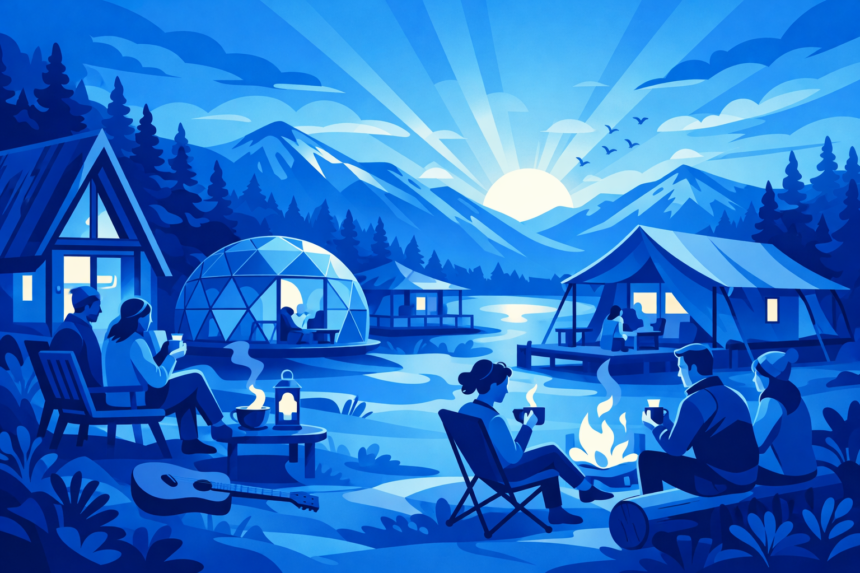
The glamping economy sits at the crossroads of comfort, nature, and modern lifestyle. In a world where travel experiences over things matter more than ever, glamping turns luxury camping into a lifestyle choice that feels both indulgent and grounded. It is where nature meets luxury, without the rough edges of traditional camping.

What Is the Glamping Economy?
The glamping economy is the fast-growing business ecosystem built around luxury camping and premium outdoor stays. Instead of roughing it with sleeping bags and shared bathrooms, glamping travel offers cozy beds, private bathrooms, curated design, and thoughtful services in natural settings. Because of this balance, glamping tourism attracts people who love the outdoors but also value comfort and style.
At its core, the glamping economy blends hospitality industry trends with experiential travel trends. Travelers are no longer just booking a place to sleep; instead, they want stories, memories, and instagrammable travel stays that feel special. As a result, glamping sites often focus on design, sustainability, and unique experiences like stargazing domes or treehouses.
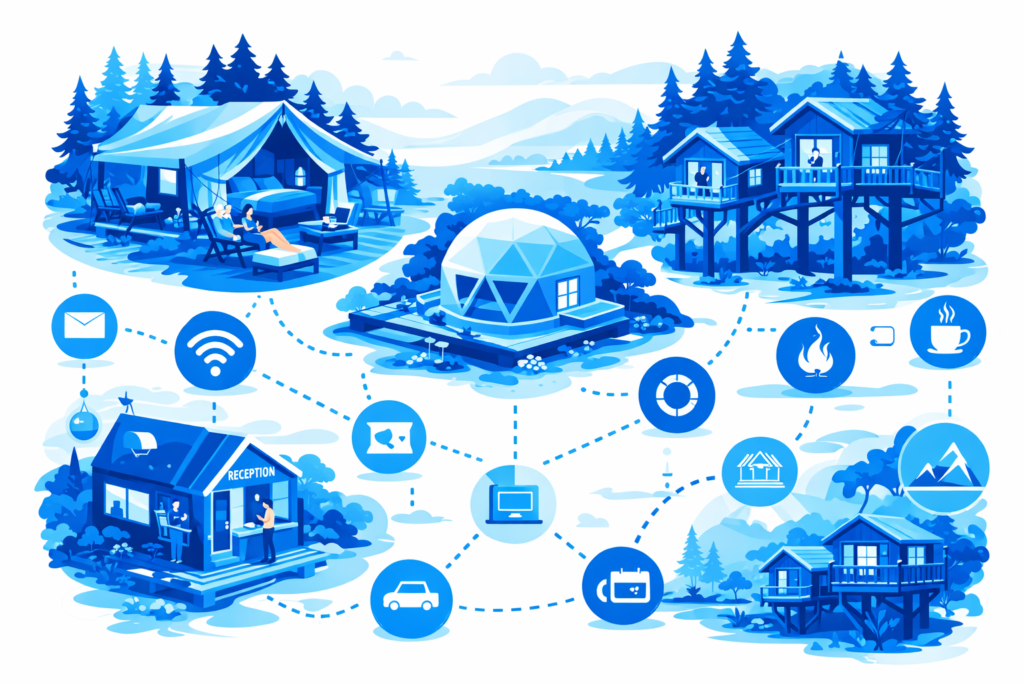
From small family-run sites to global resorts, the glamping economy creates income through stays, add-on experiences, and partnerships. Therefore, it has become a serious part of the luxury outdoor travel market and a clear luxury travel trend shaping how people explore the world.
How Glamping Differs From Traditional Camping?
Glamping and traditional camping both place people close to nature, yet the experience feels very different. Traditional camping is built around simplicity, self-reliance, and effort. You bring your own gear, set everything up, and adapt to the environment as it comes. In contrast, glamping focuses on comfort, ease, and thoughtful design. Everything is prepared in advance, so guests can relax the moment they arrive.
Because of this, glamping fits perfectly into modern travel lifestyle trends. It attracts people who love nature but do not want stress or discomfort. Instead of worrying about tents, weather, or cooking, glamping travelers focus on rest, scenery, and shared moments. This difference explains why glamping is often seen as a bridge between outdoor adventure and hotel-style comfort.
Another key contrast is mindset. Traditional camping often feels like a challenge or skill-based activity. Glamping, however, feels more like a curated experience where nature meets luxury. As a result, glamping appeals to beginners, families, couples, and busy professionals who want outdoor time without extra effort.

Overall, while both styles celebrate the outdoors, glamping removes friction. It keeps the magic of nature while adding warmth, convenience, and style, which makes it far more accessible to a wider audience.
Sleeping Setup
In traditional camping, sleeping usually means a thin mat or sleeping bag on the ground. In glamping, however, guests enjoy real beds, soft mattresses, clean linens, and sometimes even climate control, which makes rest easy and deeply comfortable.
Bathroom Access
Camping often involves shared restrooms or basic facilities. Glamping usually offers private bathrooms with hot showers and proper plumbing, which removes discomfort and makes the stay feel closer to a hotel experience.
Cooking and Food
Campers cook their own meals over fires or stoves. Glamping guests often have prepared kitchens, meal baskets, or on-site dining, which saves time and adds a sense of indulgence.
Weather Protection
Traditional tents offer limited protection from cold, rain, or wind. Glamping structures are insulated, solid, and weather-ready, so comfort remains stable in changing conditions.
Cost and Effort
Camping costs less but requires effort and planning. Glamping costs more, yet it removes stress, setup, and labor, which many travelers gladly trade for comfort.
Sustainable Glamping: The Core Value of Our Ethos
Sustainability sits at the heart of the glamping economy. While luxury camping focuses on comfort, sustainable glamping ensures that this comfort does not come at the expense of nature. Instead of large concrete buildings, many glamping sites use light structures, natural materials, and low-impact designs that blend into the landscape. Because of this approach, the land can often return to its original state with minimal damage.
Sustainable glamping also reflects a shift in travel lifestyle trends. Travelers today care more about how their trips affect the planet. They want meaningful experiences that feel good both emotionally and ethically. Glamping responds to this desire by combining eco-friendly practices with modern convenience. Solar energy, rainwater collection, and waste reduction systems are now common features rather than rare extras.
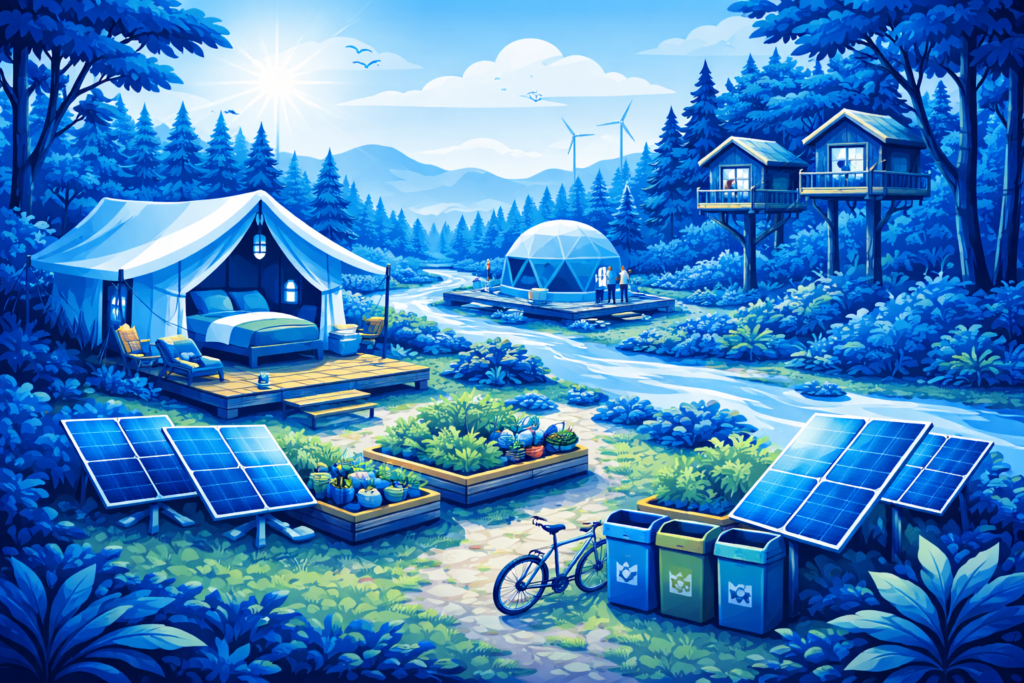
More importantly, sustainable glamping encourages a slower, more mindful way of traveling. Guests spend more time outdoors, support local communities, and reconnect with nature. As a result, glamping becomes more than just a place to stay. It turns into a statement about responsible living and conscious travel, proving that luxury and sustainability can grow together without conflict.
Key Pillars
Sustainable glamping is built on eco-friendly design, renewable energy, responsible water use, waste reduction, and strong partnerships with local communities to protect nature and culture.
Why It Matters
Tourism affects ecosystems, and without care, damage can last for years. Sustainable glamping reduces this impact while still offering comfort, making travel more balanced and responsible.
Real Benefits
Lower energy costs, stronger brand trust, happier guests, and long-term environmental protection are real advantages that sustainable glamping delivers to both operators and travelers.
Why the Glamping Economy Is Growing So Fast?
The glamping economy is expanding quickly because it fits perfectly with how people want to travel today. Travelers are moving away from rushed sightseeing and toward experiences that feel personal, relaxing, and memorable. Glamping delivers this by blending comfort with nature, which feels both refreshing and familiar. Instead of choosing between a luxury hotel or a camping trip, people now get the best of both worlds in one stay.
Another reason for this rapid growth is accessibility. Glamping removes many barriers that stop people from camping, such as lack of skills, fear of discomfort, or limited time. Because everything is ready on arrival, glamping feels easy and stress-free. This makes it attractive to families, couples, and professionals who want outdoor experiences without extra effort.
Cultural shifts also play a role. Modern travel lifestyle trends focus on balance, wellness, and meaningful moments. Glamping supports these values by encouraging slower travel, deeper connection to surroundings, and time away from busy routines. As a result, glamping tourism continues to gain attention across different age groups and income levels.
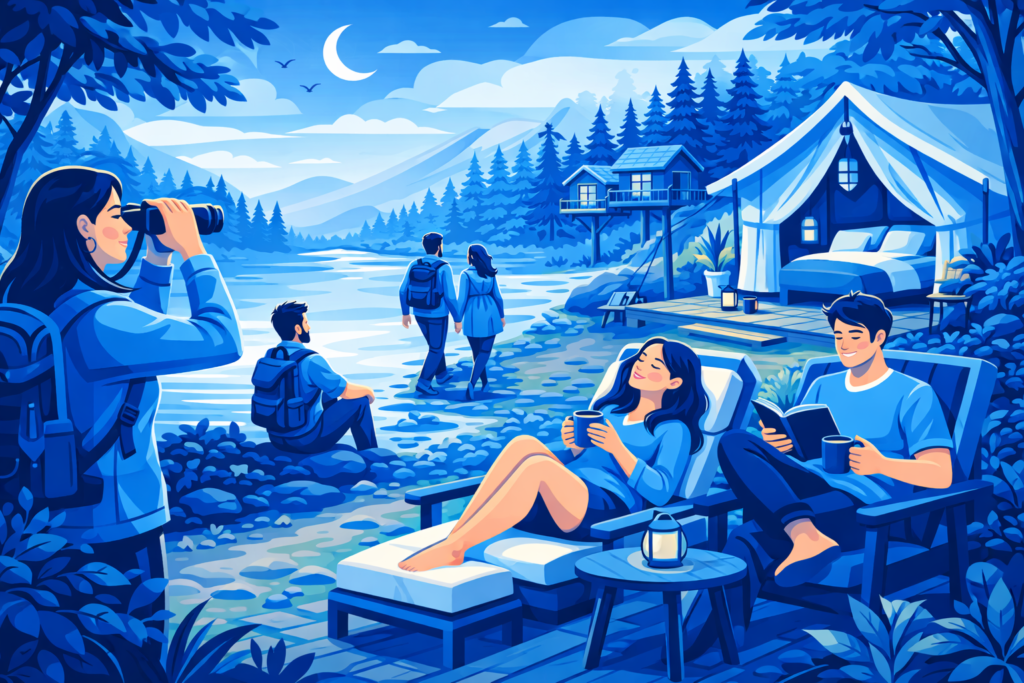
Finally, the rise of experience-based spending fuels demand. People are choosing memories over material items, and glamping offers unique stories worth sharing. This combination of comfort, simplicity, and emotional value explains why the glamping economy keeps growing at such a fast pace.
Luxury in Nature
Glamping places hotel-level comfort in natural settings. Soft beds, stylish interiors, and peaceful views make guests feel relaxed while staying close to forests, lakes, or mountains.
Social Media Buzz
Beautiful design and scenic locations make glamping highly shareable. Photos and videos spread quickly online, turning unique stays into viral travel inspiration.
More Money to Spend
Many travelers now have more disposable income for experiences. They willingly pay more for comfort, privacy, and memorable outdoor stays.
Eco-Friendly Appeal
Glamping often supports sustainable practices, which attracts travelers who care about nature and responsible tourism choices.
Types of Glamping Accommodations
One reason the glamping economy continues to grow is the wide variety of accommodation styles it offers. Unlike traditional hotels, glamping sites focus on unique structures that feel special and memorable. Each option blends comfort with nature in a different way, which allows travelers to choose experiences that match their personality and travel mood.
These accommodations also support alternative travel experiences. Some feel adventurous and playful, while others feel cozy and familiar. Because of this variety, glamping appeals to couples, families, solo travelers, and even remote workers. From simple, compact designs to spacious luxury units, glamping accommodations show how flexible and creative luxury camping can be.
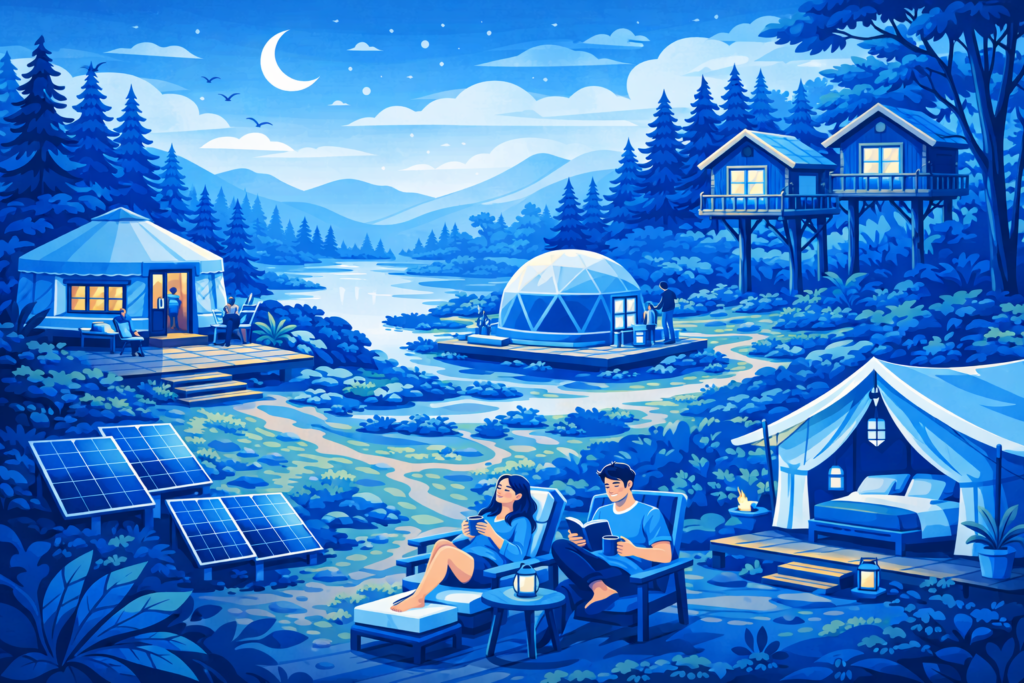
Importantly, these structures are often designed with sustainability in mind. Many use eco-friendly materials, require minimal land disturbance, and can be adapted to different climates. This makes them ideal for modern camping lifestyle trends that value both comfort and responsibility.
Yurts
Yurts are round, tent-like structures inspired by traditional nomadic homes. They offer strong insulation, spacious interiors, and a cozy atmosphere. Because of their shape and warmth, yurts work well in both warm and cold climates, making them a popular glamping choice.
Safari Tents
Safari tents are large canvas tents with solid flooring and stylish interiors. They often include real beds, bathrooms, and private decks. These tents deliver a classic luxury camping feel and are common in wildlife and scenic locations.
Treehouses
Treehouses lift the glamping experience off the ground. They provide privacy, scenic views, and a sense of adventure. Many treehouses are designed with modern comforts, making them perfect for romantic or creative stays.
Pods
Pods are compact, modern units with simple layouts and efficient design. They are easy to maintain and quick to set up. Pods appeal to travelers who enjoy minimalism while still wanting comfort and protection from the elements.
Domes
Domes feature curved structures and panoramic windows. They are especially popular for stargazing and scenic views. Their futuristic look makes them highly memorable and visually appealing for guests seeking something different.
Cabins
Cabins feel familiar and home-like. They are sturdy, comfortable, and suitable for year-round use. Cabins often attract families and longer stays because they balance rustic charm with modern convenience.
Glamping: Challenges, Future, and Future of Glamping
Glamping has moved from a niche idea to a recognized part of modern travel. However, like any growing industry, it faces both opportunities and obstacles. On one hand, travelers are increasingly drawn to comfort, nature, and meaningful experiences. On the other hand, operators must manage costs, regulations, and changing expectations.
The future of glamping depends on balance. It must keep its promise of simplicity and comfort while adapting to new trends, technologies, and environmental responsibilities. As travel lifestyle trends continue to favor experiences over things, glamping is well positioned to grow, provided it evolves carefully.

Innovation, sustainability, and thoughtful design will shape what comes next. While challenges exist, they also push the industry to improve. Because of this, glamping continues to refine its identity and expand its appeal across different regions and traveler types.
What is Glamping?
Glamping is luxury camping that blends outdoor living with modern comfort. It allows people to enjoy nature without giving up real beds, private bathrooms, and thoughtful design, making outdoor travel easy and welcoming.
Key Challenges
High startup costs, land regulations, seasonal demand, and weather risks can make operations complex. Managing these challenges requires planning, flexibility, and a clear understanding of local rules and markets.
Current Trends
Wellness retreats, remote work stays, eco-focused design, and unique themed accommodations are shaping today’s glamping experiences and attracting new audiences.
Bright Future
As demand for experiential and sustainable travel grows, glamping has a strong future. Its ability to adapt and innovate keeps it relevant and appealing.
Who Is Driving the Glamping Economy?
The glamping economy is powered by a new kind of traveler who values comfort, experiences, and lifestyle alignment. These travelers are less interested in traditional sightseeing and more focused on meaningful moments, beautiful surroundings, and stress-free stays. Because glamping blends nature with ease, it naturally attracts people who want balance between adventure and relaxation.
Cultural shifts also play a major role. Modern travel lifestyle trends emphasize wellness, flexibility, and personal expression. Glamping fits this mindset perfectly by offering unique stays that feel personal and shareable. In addition, changes in work patterns, such as remote and hybrid work, allow people to travel more often and stay longer. This freedom fuels demand for comfortable outdoor accommodations.

Another important factor is emotional value. Glamping offers stories, photos, and memories that feel special. These experiences resonate strongly with people who choose travel experiences over material purchases. As a result, glamping tourism continues to expand across different age groups and income levels, making the market diverse and resilient.
Main Drivers
Experience-focused travelers, eco-conscious consumers, social media influence, and the desire for comfort in nature are the main forces pushing the glamping economy forward.
Key Groups
- Young professionals
- Couples seeking romantic escapes
- Families looking for easy outdoor trips
- Remote workers and digital nomads
- Pet owners searching for pet-friendly stays
Growth Factors
Rising disposable income, flexible work lifestyles, growing interest in sustainable travel, and demand for unique experiences all contribute to the steady growth of glamping.
Setting up a glamp site
Setting up a glamp site is a creative and strategic process that blends hospitality, design, and respect for nature. While it may look simple from the outside, successful glamping sites are built on careful planning and clear decisions. Every step, from choosing land to welcoming the first guests, shapes the final experience.
The goal is to create a space where guests feel relaxed, safe, and inspired. At the same time, the site must operate efficiently and sustainably. Because glamping sits between hotels and camping, it requires a balance of comfort and simplicity. When done right, a glamp site can attract loyal visitors and generate steady income.

Thinking long term is essential. Weather, maintenance, guest flow, and local relationships all matter. By planning carefully and moving step by step, operators can avoid costly mistakes and build a site that fits both the environment and the expectations of modern travelers.
Pick Your Spot
Choose a location with natural beauty, privacy, and good access. Scenic views, quiet surroundings, and proximity to attractions all increase appeal, while safe terrain and basic infrastructure make operations easier.
Get Permissions
Before building, secure zoning approvals, land-use permits, and environmental permissions. Rules vary by region, so early research and local guidance help avoid delays and legal problems later.
Build Basics
Start with essential infrastructure such as pathways, foundations, water, electricity, and waste systems. These basics support comfort and safety while allowing the site to function smoothly year-round.
Furnish Comforts
Focus on quality beds, lighting, heating, and simple decor. Comfortable furnishings transform a basic structure into a welcoming retreat that meets glamping expectations.
Market and Launch
Use strong visuals, storytelling, and online platforms to attract attention. A clear brand message and smooth booking process help create early momentum and positive reviews.
Benefits of the Glamping Economy
The glamping economy delivers value on many levels, which explains why it continues to attract travelers, entrepreneurs, and local communities. Unlike traditional tourism models that rely on heavy infrastructure, glamping blends flexibility with profitability. This balance allows businesses to grow while keeping costs and environmental impact under control.
Another major benefit is adaptability. Glamping sites can start small and expand gradually, which lowers financial risk. They can also adjust to seasonal demand, new travel lifestyle trends, and changing guest expectations more easily than large hotels. Because of this flexibility, glamping tourism often feels more resilient during economic shifts.

Beyond business advantages, the glamping economy supports sustainable development. It encourages responsible land use, promotes eco-conscious travel, and creates meaningful connections between visitors and local areas. Instead of mass tourism, glamping focuses on quality experiences, which leads to longer stays, higher guest satisfaction, and stronger loyalty.
Most importantly, glamping aligns with how people want to travel today. Travelers seek comfort, authenticity, and purpose in their journeys. By delivering all three, the glamping economy offers benefits that extend far beyond overnight stays, creating lasting value for everyone involved.
Low Startup Costs
Glamping usually requires less upfront investment than hotels or resorts. Modular units, tents, and small structures reduce construction costs while still allowing operators to charge premium prices for unique experiences.
Job Creation
Glamping sites create local jobs in cleaning, maintenance, guest services, food, and guiding. These roles support nearby communities and encourage small-scale entrepreneurship.
Eco-Friendly Growth
Because glamping relies on low-impact structures and sustainable practices, it supports growth without heavy environmental damage, aligning business success with responsible tourism.
High Profits
Unique design, limited supply, and strong demand allow glamping operators to set higher nightly rates, often leading to healthy profit margins over time.
Community Boost
Glamping attracts visitors to rural and lesser-known areas, increasing spending at local shops, farms, and services, which strengthens regional economies.
The Business Side of the Glamping Economy
Behind the relaxing atmosphere and beautiful settings, the glamping economy operates as a structured and increasingly professional business sector. Successful glamping ventures combine hospitality skills with smart planning, pricing strategy, and strong branding. Unlike traditional hotels, glamping businesses often start small, test demand, and then scale gradually, which reduces risk and increases flexibility.
What makes the business side especially attractive is diversification. Income does not come only from overnight stays. Instead, glamping operators often build multiple revenue streams around experiences, partnerships, and digital presence. This approach aligns well with modern hospitality industry trends, where creativity and experience design matter as much as accommodation itself.

At the same time, costs must be managed carefully. Land, maintenance, staffing, and marketing all play a role in long-term success. Operators who balance expenses with guest value tend to perform best. As travel lifestyle trends continue to favor experiential and luxury outdoor travel, the business side of glamping becomes more competitive, yet more rewarding.
What Drives Revenue?
Revenue in the glamping economy comes mainly from nightly stays, premium pricing, add-on experiences, events, and partnerships. Extra services such as guided tours, wellness sessions, and curated packages often increase average guest spending.
Common Business Models
- Nightly rental model
- Experience-based packages
- Retreats and events
- Hybrid models using digital monetization strategies
Key Costs Involved
Major costs include land leasing or purchase, accommodation units, utilities, maintenance, staff wages, insurance, and marketing. Ongoing upkeep is essential to maintain quality and guest satisfaction.
Growth and Trends
Rising demand for experiential travel, eco luxury travel, and flexible stays continues to drive growth. Technology, sustainability, and strong branding are shaping the future of glamping businesses.
Technology’s Role in the Glamping Economy
Technology plays a quiet but powerful role in shaping the modern glamping economy. While the experience feels natural and unplugged, smart systems behind the scenes make everything run smoothly. From the first online search to checkout, technology helps operators deliver comfort, efficiency, and consistency without disrupting the connection to nature.
For guests, technology removes friction. Booking, communication, and personalization feel fast and simple, which matches modern travel lifestyle trends. For operators, digital solutions reduce manual work, lower costs, and improve decision-making. As a result, even small glamping sites can compete with larger hospitality brands.
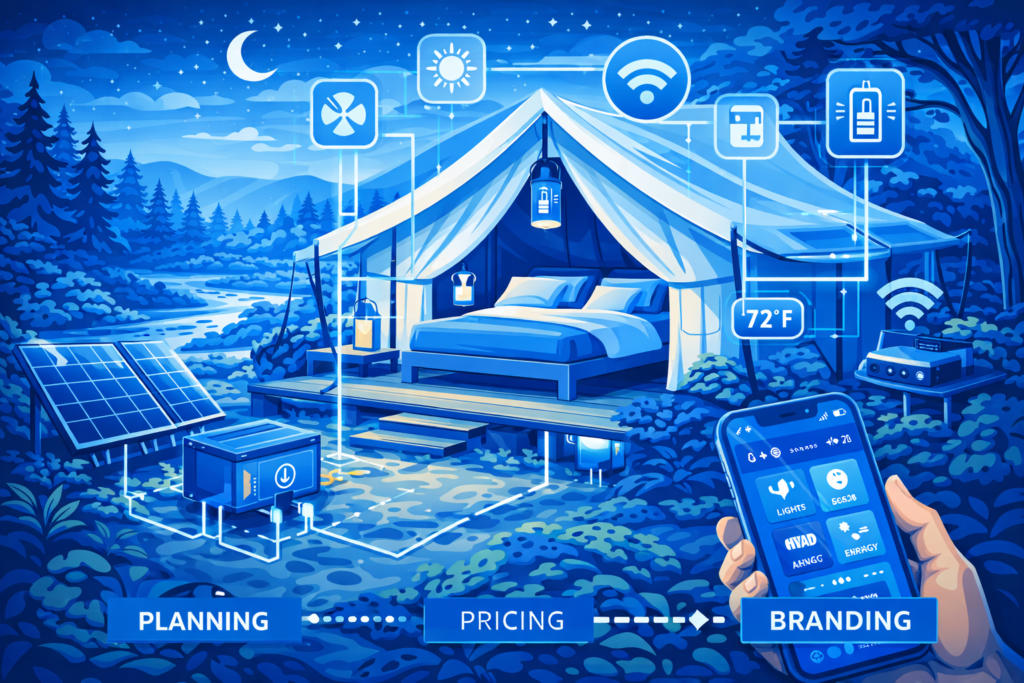
Technology also supports sustainability goals. Energy monitoring, automation, and data-driven planning help reduce waste and improve resource use. Instead of replacing nature, technology works in the background to protect it. This balance is one reason the glamping economy continues to scale without losing its charm.
Easy Booking Apps
Mobile-friendly booking systems allow guests to reserve stays instantly. Integrated calendars, payments, and confirmations improve the guest experience, while operators rely on digital tools to manage availability, pricing, and communication efficiently.
Smart Tents and Controls
Smart lighting, heating, and climate controls increase comfort while saving energy. Automated systems adjust conditions based on weather and occupancy, which keeps guests comfortable and operations efficient.
Green Tech Boost
Solar panels, battery storage, water sensors, and energy tracking software support eco-friendly operations. These technologies reduce environmental impact and long-term costs at the same time.
Fun VR Experiences
Virtual tours and previews help guests explore glamping sites before booking. This builds trust, excitement, and confidence, especially for first-time glamping travelers.
Sustainability and the Glamping Economy
Sustainability is not just an added feature in the glamping economy; it is a foundation. Glamping tourism grew alongside a global shift toward conscious travel, where people care about how their trips affect the planet and local communities. Because glamping uses lighter structures and flexible designs, it naturally supports low-impact development compared to large hotels or resorts.
Modern travelers also expect transparency. They want to know where energy comes from, how waste is handled, and whether local people benefit. Glamping businesses that embrace these expectations build stronger trust and long-term loyalty. As sustainable travel trends continue to influence decisions, glamping stands out as a model that blends comfort with responsibility.

At the same time, sustainability strengthens business resilience. Lower resource use reduces operating costs, while eco-conscious branding attracts a growing market of mindful travelers. By aligning economic success with environmental care, the glamping economy proves that profit and purpose can move forward together.
Core Sustainability Pillars
Key pillars include energy efficiency, water conservation, waste reduction, use of natural or recycled materials, and active support for local communities and ecosystems.
Eco-Friendly Practices
Common practices include solar power, composting toilets, rainwater harvesting, limited land clearing, and sourcing food and services from nearby producers.
Benefits to Economy
Sustainable operations lower long-term costs, increase guest satisfaction, and strengthen brand reputation, which supports steady growth and financial stability.
Why It Matters
Without protecting nature and communities, glamping cannot thrive. Sustainability ensures long-term success while preserving the landscapes that make glamping special.
Popular Glamping Destinations Around the World
Glamping has become a global travel movement, and its destinations reflect the diversity of landscapes and cultures around the world. From wild savannas to quiet forests, glamping tourism adapts to local environments while offering comfort and style. Because travelers seek alternative travel experiences, these destinations continue to gain popularity across continents.

Each region brings its own flavor to the glamping economy. Some focus on wildlife and adventure, while others highlight wellness, design, or cultural immersion. Despite their differences, all successful glamping destinations share one thing in common: they combine nature with comfort in a way that feels memorable and meaningful. As a result, glamping has become a key part of modern luxury outdoor travel worldwide.
Africa Spots
Africa is known for safari-style glamping in vast natural reserves. Luxury tents offer close views of wildlife while providing comfort, privacy, and unforgettable scenery in remote landscapes.
Asia Highlights
Asia offers glamping in jungles, mountains, and beaches. Bamboo lodges, domes, and eco-resorts blend tradition with modern design, creating peaceful and culturally rich stays.
Americas Gems
In North and South America, glamping ranges from forest cabins to desert domes. These stays often highlight outdoor adventure, scenic views, and year-round accessibility.
Europe Favorites
Europe focuses on eco-designed glamping sites in countryside and coastal areas. Sustainability, wellness, and stylish simplicity define many of the region’s most popular glamping locations.
Challenges Facing the Glamping Economy
Although the glamping economy continues to grow, it faces several challenges that operators and investors must carefully manage. Glamping sits between hospitality and outdoor tourism, which means it often deals with limitations from both sides. While demand is strong, success depends on planning, adaptability, and long-term thinking.
One major challenge is balancing luxury with sustainability. Guests expect comfort, yet environmental responsibility limits how much infrastructure can be built. At the same time, competition is increasing as more glamping sites enter the market. This makes differentiation and quality even more important.

Seasonality also plays a role. Many glamping locations depend on favorable weather, which can shorten operating seasons and affect cash flow. In addition, changing travel trends and economic uncertainty can influence how often people travel and how much they spend. Despite these issues, glamping remains resilient because it adapts quickly to new conditions and traveler expectations.
Money Problems
Startup costs for land, units, utilities, and marketing can be high. While glamping is cheaper than hotels, poor budgeting or slow bookings can still create financial pressure.
Rule Roadblocks
Zoning laws, land-use restrictions, and environmental regulations vary by region. Navigating permits and compliance can delay projects and increase costs if not handled early.
Weather Worries
Weather impacts demand, maintenance, and safety. Storms, heat, or cold seasons can reduce occupancy and raise repair and operating expenses.
High Prices Limit Customers
Premium pricing attracts some travelers but excludes budget-conscious guests. This limits the customer base and requires clear value positioning.
Marketing Struggles
Standing out in a crowded market is difficult. Without strong branding, storytelling, and online visibility, even quality glamping sites may struggle to attract guests.
Future Trends in the Glamping Economy
The future of the glamping economy is shaped by changing traveler values, new technologies, and a growing focus on sustainability. As people continue to seek experiences rather than material goods, glamping stands out as a travel option that feels both meaningful and comfortable. This shift supports long-term growth and steady global interest.
Glamping is also becoming more diverse. Operators are designing stays for different lifestyles, seasons, and budgets. From family-friendly sites to wellness retreats and remote work escapes, glamping continues to adapt. Because of this flexibility, the industry can respond quickly to market changes and new expectations.
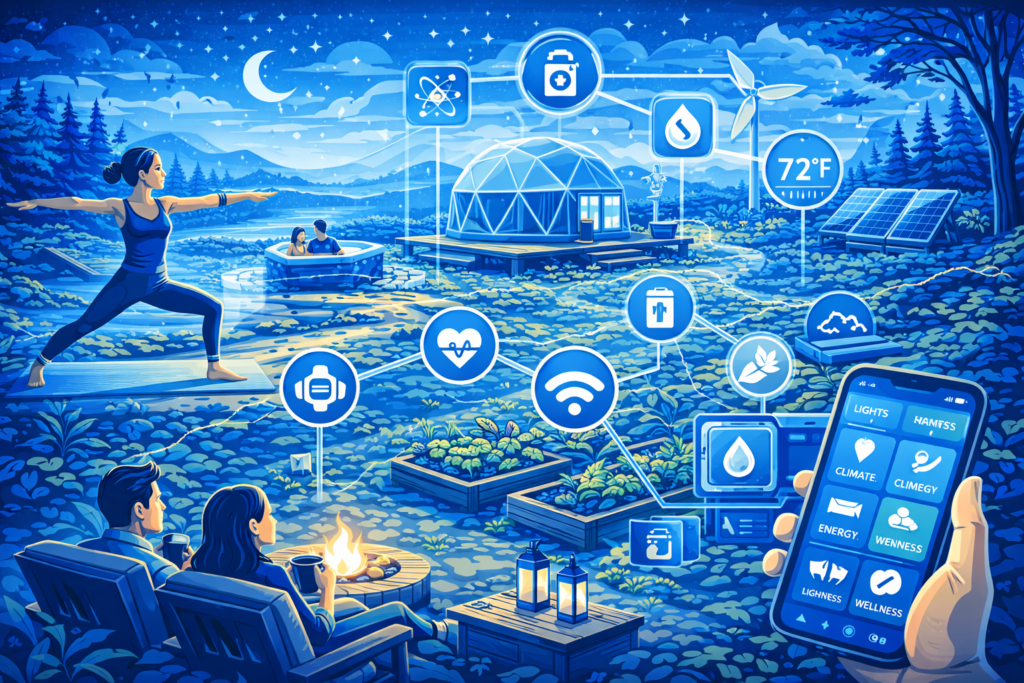
Another defining factor is professionalism. What began as a niche concept is now a structured part of the hospitality industry. Standards, branding, and guest experience design are improving, which builds trust and encourages repeat visits. These developments suggest that glamping is not a short-term trend, but a lasting evolution in travel.
Market Growth
Global demand for unique and comfortable outdoor stays continues to rise. New regions and traveler segments are entering the market, supporting steady expansion.
Eco-Friendly Focus
Sustainability will remain central. Eco materials, energy efficiency, and low-impact development will define successful glamping sites in the future.
Tech Integration
Smart systems, automation, and data-driven tools will improve operations, guest comfort, and resource management across glamping businesses.
Wellness and Experiences
Wellness-focused stays, nature therapy, fitness, and mindfulness experiences will attract travelers seeking balance and restoration.
Business Expansion
Franchising, partnerships, and multi-site brands will help operators scale while maintaining consistent quality and identity.
Is the Glamping Economy Worth Investing In?
For many investors and entrepreneurs, the glamping economy looks increasingly attractive. It combines hospitality, lifestyle, and experiential travel into one flexible business model. As travelers continue to value comfort, nature, and unique stays, glamping fits neatly into long-term travel trends rather than short-lived fads.
Unlike traditional hotels, glamping businesses can scale gradually. This allows investors to test demand, adjust pricing, and refine the guest experience without committing to massive upfront construction. Because of this flexibility, glamping often feels more approachable for first-time hospitality investors.

However, like any investment, glamping requires research and realistic expectations. Location, climate, regulations, and market demand all influence success. Investors who understand these factors and plan carefully are better positioned to benefit from the sector’s growth. Overall, glamping offers an appealing balance of creativity, profitability, and sustainability.
Market Growth
Demand for luxury camping and experiential travel continues to rise globally. This steady growth supports long-term investment potential across different regions and demographics.
Startup Costs
Startup costs are lower than hotels but still significant. Expenses include land, accommodation units, utilities, permits, and marketing, which must be planned carefully.
Potential Profits
Glamping allows premium pricing due to unique experiences. With strong occupancy and controlled costs, profit margins can be attractive over time.
Key Risks
Seasonality, weather, regulations, and competition are key risks. Poor location choice or weak branding can also limit returns.
Investment Verdict
For investors seeking lifestyle-driven opportunities, the glamping economy is worth considering. With smart planning, it offers solid returns and long-term relevance.
Frequently Asked Questions
Below are some of the most common questions people ask about glamping and the glamping economy. These answers are written in simple, clear language to help readers quickly understand both the lifestyle and the business potential behind luxury camping.
Glamping is short for “glamorous camping.” In simple terms, it means enjoying nature without giving up comfort. Instead of sleeping on the ground or using basic facilities, glamping offers real beds, private bathrooms, electricity, and stylish interiors. You still stay close to nature, but the experience feels relaxed and easy, more like a hotel in the outdoors than traditional camping.
Yes, the glamping economy can be profitable when managed well. Many glamping sites charge higher nightly rates because they offer unique and memorable experiences. At the same time, operating costs are often lower than full-scale hotels. With good location choice, strong branding, and consistent bookings, glamping businesses can generate healthy long-term returns.
The cost depends on location, size, and accommodation type. Small glamping setups can start with a modest budget using tents, pods, or yurts. Larger or more luxurious sites require higher investment for land, infrastructure, and amenities. In general, glamping is more affordable to start than hotels, but proper planning is still essential.
Glamping is popular with couples, families, young professionals, and people who enjoy experience-based travel. It also attracts travelers who love nature but dislike discomfort. Remote workers and pet owners are another growing group, especially those looking for peaceful, flexible, and pet-friendly travel options.
Glamping can be environmentally friendly, especially when designed with sustainability in mind. Many sites use eco-friendly materials, renewable energy, and low-impact construction. Compared to large resorts, glamping often leaves a smaller footprint. However, sustainability depends on how the site is built and managed.
Luxury hotels focus on urban or resort comfort, while glamping focuses on nature-based experiences. Glamping emphasizes privacy, scenery, and connection to the outdoors. Hotels offer convenience and services, but glamping offers a slower, more immersive experience where nature plays a central role.
Yes, many glamping sites operate year-round. Insulated cabins, pods, and domes with heating make winter stays possible. However, seasonality still matters, and some locations perform better during certain months. Year-round success depends on climate, design, and local demand.
Current trends include wellness-focused stays, eco-luxury travel, remote work-friendly accommodations, and highly instagrammable designs. Guests also value personalized experiences, such as guided activities, local food, and nature-based relaxation.
Cabins and pods make up a significant portion of the glamping market. They are popular because they are durable, versatile, and suitable for all seasons. Their lower maintenance needs and broad appeal make them a strong choice for operators and travelers alike.
The global glamping market is growing rapidly and is valued in the billions. Demand continues to rise as travelers prioritize experiences, comfort, and sustainable travel. This growth suggests strong long-term potential for the glamping economy worldwide.