
1. Introduction
JSP meaning in text can feel confusing at first, especially when it shows up in chats, platforms, or even marketing discussions. At a glance, it looks technical. However, once you understand how it’s used, JSP becomes easier to spot, interpret, and apply correctly in modern digital communication.
2. What Does JSP Mean in Texting?
When people ask about the jsp abbreviation meaning, they often expect a single, simple answer. In reality, JSP has more than one meaning, depending on context.
In most technical and professional spaces, JSP stands for JavaServer Pages. It’s a technology used to create dynamic web pages that interact with databases and users. However, when JSP appears in texting or casual online conversations, it may not always be technical. Sometimes, it’s shorthand used among people who already share a tech or business background.
In jsp meaning in online conversations, context is everything. If someone says, “The checkout page runs on JSP,” they’re clearly talking about web development. On the other hand, if JSP appears in a chat without technical clues, it may be unclear or misunderstood.
Unlike slang such as “LOL” or “BRB,” JSP is not universal slang. It’s a term that mostly makes sense inside professional, technical, or semi-technical environments. That’s why understanding digital communication terms like JSP is so important for businesses and marketers who communicate online every day.
3. Origins and Evolution of JSP in Digital Communication
JSP originated in the early days of server-side web development. Developers needed a way to create dynamic web pages without writing massive blocks of backend code. JSP solved that problem by allowing Java code to work directly inside HTML pages.
Over time, JSP moved beyond developer-only conversations. As businesses built more complex websites, marketers, product managers, and content teams started hearing the term more often. That’s when JSP slowly entered broader digital communication.

Today, JSP still exists, although newer frameworks often replace it. Yet, the term hasn’t disappeared. Instead, it evolved. Now, JSP pops up in:
- Business chats
- Project planning meetings
- Tech-adjacent marketing discussions
Because of this shift, jsp meaning in business chat has become more common than ever. Even people who never write code may reference JSP when talking about platforms, performance, or integrations.
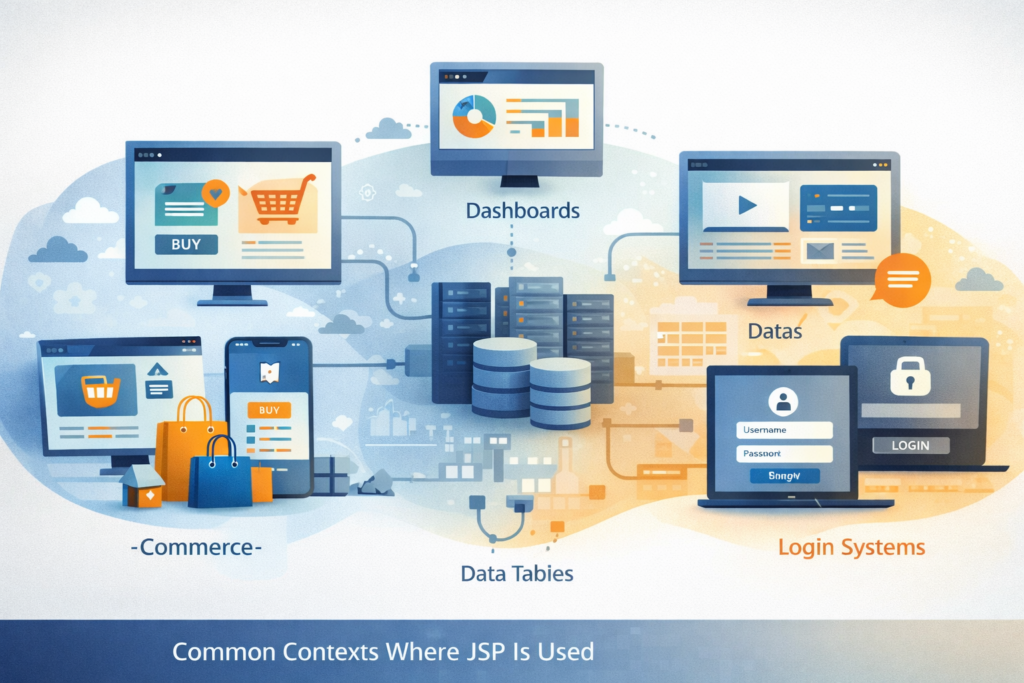
4. Common Contexts Where JSP Is Used
Understanding where JSP appears helps you decode its meaning faster. Below are the most common environments where JSP is referenced.
- E-commerce Sites
Many older and mid-scale e-commerce platforms still use JSP for product pages, carts, and checkout flows. When teams discuss page speed, personalization, or backend updates, JSP often comes up naturally.
For marketers, this matters because backend structure affects conversion rates, SEO, and user experience.
- Database-Driven Apps
JSP connects user actions to databases. Whenever an app pulls data dynamically—such as orders, profiles, or analytics—JSP may be involved. In conversations about data accuracy or performance, JSP becomes part of the language.
This is where jsp meaning in online conversations blends technical and business communication.
- User Login Systems
Login forms, dashboards, and account areas often rely on server-side logic. If your team talks about authentication, permissions, or security updates, JSP might appear in Slack messages or emails.
Even non-technical team members may reference it when coordinating tasks.
- Content Management
Some legacy content management systems use JSP templates. When marketers discuss publishing workflows or content updates, JSP can quietly sit behind the scenes while shaping how pages render.
Knowing this helps marketers communicate better with developers and avoid confusion.
5. JSP Meaning in Marketing and Brand Communication
In marketing, JSP rarely appears as a customer-facing term. Instead, it lives behind the scenes. However, that doesn’t mean it’s irrelevant.
When marketing teams discuss landing pages, tracking scripts, personalization, or site speed, JSP often becomes part of the internal conversation. Understanding jsp meaning in business chat allows marketers to ask better questions and make smarter decisions.
Think of JSP like plumbing in a building. Customers don’t see it, but if something breaks, everyone feels it. Similarly, JSP affects:
- Load times
- Form behavior
- Dynamic content delivery
When marketers understand basic digital communication terms like JSP, collaboration improves. Messages become clearer. Projects move faster. Fewer assumptions get made.
This understanding also builds credibility. When marketers speak the same language as developers, trust grows. That trust leads to better execution and stronger results.
6. How JSP Is Typically Used in Conversations
JSP usually appears in context-specific conversations, not casual slang exchanges.
6.1 Real-Life Examples
Here are a few examples of how JSP might show up in chats:
- “The pricing page runs on JSP, so changes need dev support.”
- “That form error is coming from the JSP file.”
- “We need to update the JSP template for mobile.”
In each case, JSP refers to structure, not slang.

6.2 Why People Use It
People use JSP in conversation because it’s efficient. Instead of explaining long technical details, one acronym communicates the setup instantly—at least to the right audience.
For mixed teams, though, this can create confusion. That’s why understanding jsp abbreviation meaning is helpful even if you never touch code.
7. Should Brands Use JSP in Marketing Messages?
Short answer: rarely, and carefully.
JSP isn’t consumer-friendly language. Most audiences don’t know what it means, and those who do may associate it with backend systems rather than brand value.
However, there are exceptions. If your brand targets developers, SaaS buyers, or technical decision-makers, JSP references may feel natural. In that case, clarity matters more than simplicity.
For general audiences, though, mentioning JSP publicly can feel confusing or unnecessary. It’s usually better to translate technical details into benefits.
For example, instead of saying, “Our JSP architecture improves performance,” say, “Our platform loads faster and adapts in real time.”
This keeps messaging human, clear, and aligned with online language trends that favor clarity over complexity.
8. JSP Meaning on Snapchat
When JSP appears on Snapchat or similar platforms, context becomes even more important.
- Main Meaning
On Snapchat, JSP almost always does not mean JavaServer Pages. Instead, it may be shorthand within a private friend group, niche slang, or even a typo.
Unlike mainstream abbreviations, JSP has no widely accepted slang meaning on Snapchat.
- How It’s Used
Most uses are contextual. Someone might use JSP as an inside joke, initials, or shorthand understood only by that group. That’s why assumptions can be risky.
- Other Meanings
Occasionally, people confuse JSP with JS (JavaScript) or invent temporary meanings. This reinforces one rule: never assume slang meaning without context.
9. Benefits of Understanding Text Slang Like JSP for Marketers
Understanding terms like JSP helps marketers in several ways.
First, it improves internal communication. When you understand what teammates mean, fewer clarifications are needed.
Second, it reduces risk. Misusing technical language can damage credibility or confuse audiences.
Third, it supports trend awareness. Staying aware of online language trends helps brands sound current without sounding careless.
Finally, it builds confidence. When marketers understand digital communication terms, they participate more actively in strategic conversations.
10. Risks of Using JSP Incorrectly in Business Communication
Using JSP incorrectly can cause real problems.
- It may confuse clients.
- It may frustrate developers.
- It may weaken trust.
For example, using JSP as slang in a public campaign can make a brand seem out of touch. On the other hand, avoiding clarity in internal chats can slow projects down.
The biggest risk is assumption. Assuming everyone knows what JSP means leads to misalignment.
Clear communication always wins.
11. How to Decide If JSP Fits Your Brand Voice
Choosing whether to use JSP comes down to strategy.
- Know Your Brand Voice
Is your brand friendly, technical, or formal? If your voice values simplicity, JSP may not fit externally.
- Match JSP’s Strengths
JSP is precise, not emotional. It works best when clarity and accuracy matter more than warmth.
- Test with Samples
Before using JSP in content, test it. Share drafts internally. Watch reactions.
- Check Audience Fit
If your audience understands technical language, JSP may feel natural. If not, simplify.
- Weigh Ease vs. Effort
Using JSP saves time internally. Externally, it often creates extra explanation. Balance both sides.
12. JSP vs. Similar Text Abbreviations
JSP is often confused with:
- JS (JavaScript)
- API
- HTML
Unlike slang abbreviations, JSP belongs to functional language, not emotional expression. Understanding this difference prevents misuse.
13. Usage in Different Contexts
- Everyday Talk
Rare. Most people don’t use JSP casually.
- Writing and Web Pages
Common in documentation, dev notes, and internal wikis.

- Language Learning
JSP appears in tech-focused learning, not general language education.
- Academic Papers
Used in computer science, not linguistics or communication studies.
14. Best Practices for Using Slang in Digital Marketing
- Always prioritize clarity
- Match audience knowledge
- Avoid forced slang
- Test before publishing
- Translate tech into benefits
These practices align with modern online language trends that reward authenticity.
15. Real-World Examples of JSP in Online Communication
In real teams, JSP appears quietly:
- In Slack messages
- In sprint planning
- In performance discussions
Marketers who understand it move faster and communicate better.
16. Frequently Asked Questions
To clear up any remaining confusion, the following frequently asked questions break down the most common doubts about JSP meaning in text, business chat, and online conversations in a simple, practical way.
It usually refers to JavaServer Pages, not casual slang.
No. It’s neutral and technical.
Only if the audience understands it.
No. Context changes meaning.
Only when it fits brand tone and audience expectations.
Test messaging and prioritize clarity.
No. It’s more common among professionals.
JavaServer Pages.
No. JS is a technical abbreviation for JavaScript.