Introduction
Vkei fashion is loud, emotional, and impossible to ignore. It blends music, art, and personal freedom into one striking visual language. In this guide, I’ll walk you through what vkei fashion really is, where it came from, and how anyone can explore this bold Japanese alternative fashion style today.
What Is Vkei Fashion?
What is visual kei fashion? At its core, vkei fashion—short for visual kei fashion—is a Japanese rock–inspired style that puts visual impact first. Think dramatic outfits, expressive makeup, bold hair, and a strong sense of identity. The look grew out of the Japanese rock scene, where bands used clothing and visuals to tell stories before playing a single note.
Unlike everyday fashion trends, the visual kei style is about emotion and performance. It mixes gothic Japanese fashion, punk Japanese fashion, and androgynous fashion Japan is known for. Because of that, vkei style does not follow strict gender rules. Anyone can wear skirts, lace, leather, or heavy boots if it fits their expression.
Another key idea behind visual kei clothing is transformation. Many fans see the visual kei look as a mask and a mirror at the same time. It hides daily life while showing inner feelings. That mix is why the vkei aesthetic feels theatrical, almost like living art.
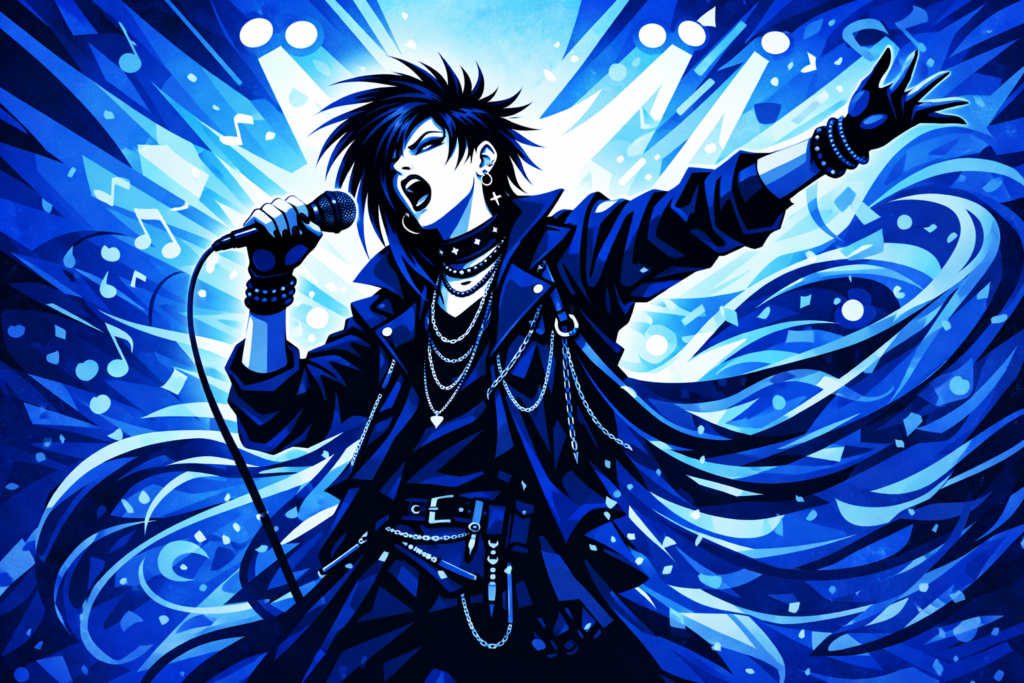
Today, visual kei outfits appear both on stage and in casual streetwear. While the roots are musical, modern visual kei fashion has grown into a full lifestyle and creative movement that goes far beyond concerts.
Origins of Vkei Fashion
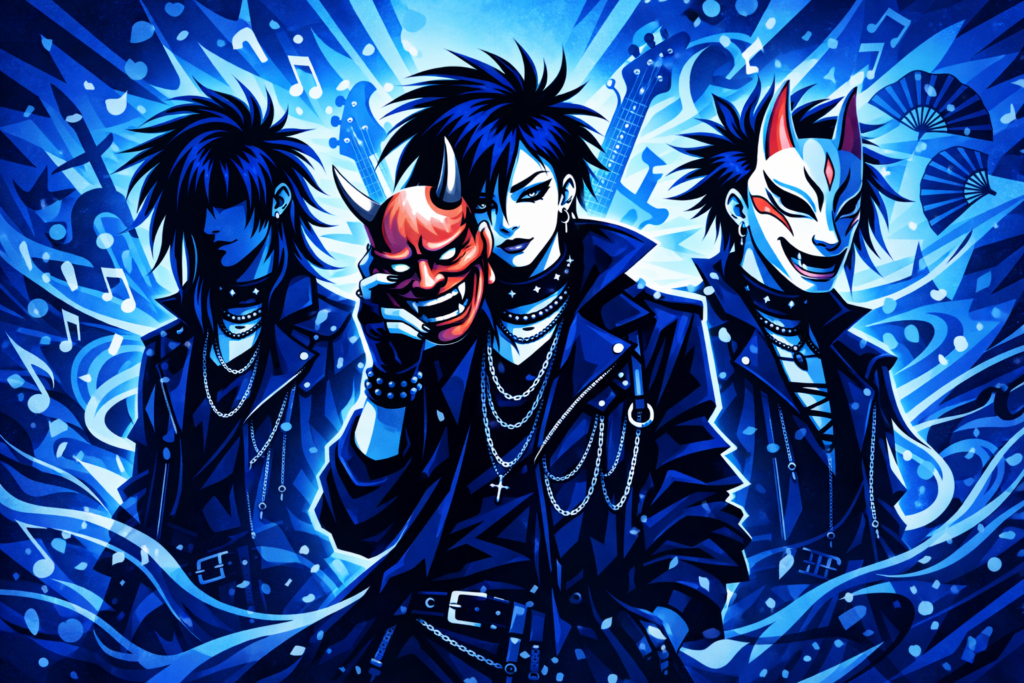
The origins of vkei fashion are deeply tied to Japan’s music scene and its desire to break visual and cultural boundaries. This style did not appear as a planned fashion movement. Instead, it grew naturally from musicians who wanted to express emotion, rebellion, and individuality through both sound and appearance. Over time, these bold visual choices formed what we now recognize as visual kei fashion, blending music, art, and self-expression into one powerful identity.
Early Roots
The early roots of vkei fashion can be traced back to Japan in the late 1970s and early 1980s. Rock musicians began experimenting with stage outfits, makeup, and hairstyles to stand out. At first, these looks were simple but expressive, helping artists visually match the energy and emotion of their music.
Key Influences
Several influences shaped early visual kei style. Western glam rock, punk, and metal introduced bold makeup, leather, and dramatic silhouettes. At the same time, traditional Japanese theater inspired exaggerated expressions and stylized beauty. These influences blended together, creating a look that felt both global and uniquely Japanese.
First Big Bands
The first big bands played a crucial role in defining vkei fashion. As these groups gained popularity, their visual presentation became just as important as their music. Fans began copying hairstyles, outfits, and makeup, turning stage costumes into everyday inspiration and helping visual kei fashion grow beyond concerts into a full cultural movement.
Key Characteristics of Vkei Fashion
Vkei fashion stands out because it is built on strong visual storytelling. Every detail, from hair to shoes, works together to express emotion, attitude, and identity. Instead of following seasonal trends, this style focuses on impact and mood. The visual kei look is meant to be noticed, whether on stage, in photos, or on the street. While the exact outfit can change from person to person, several key characteristics appear again and again in vkei style and help define its unique place within Japanese alternative fashion.

Androgynous Looks
One of the most defining traits of vkei fashion is its androgynous appearance. Traditional gender rules are intentionally blurred. Skirts, makeup, lace, leather, and sharp tailoring are worn by anyone who connects with the style. This freedom allows people to express emotions openly and creates a powerful sense of individuality that feels natural within visual kei culture.
Dramatic Hair
Dramatic hair is essential to the visual kei aesthetic. Hairstyles are often spiked, layered, teased, or sculpted into bold shapes. Bright colors, deep blacks, silvers, and reds are common choices. Visual kei hair is not meant to look casual. Instead, it acts like a frame that highlights the face and completes the overall visual impact.
Bold Makeup
Visual kei makeup is expressive and theatrical. Dark eyeliner, heavy eyeshadow, pale or matte skin, and sharp contouring are frequently used. The goal is not to look natural but to amplify emotion. Makeup helps transform facial expressions, making them more dramatic and striking, especially under lights or in photographs.
Layered Clothes
Layering plays a major role in visual kei outfits. Jackets over vests, belts over coats, and chains layered on top of fabric create depth and movement. These layers give outfits a complex, almost armor-like appearance. The result feels dynamic and intentional rather than simple or flat.
Edgy Patterns
Edgy patterns bring intensity to vkei fashion. Stripes, crosses, distressed fabrics, metal details, and dark textures are commonly used. These elements help build a strong dark aesthetic that feels dramatic and symbolic rather than random. Much like dark storytelling visuals explored in this dark aesthetic concept, vkei patterns are used to create mood and visual tension through clothing.
Popular Types of Vkei Fashion Styles
Vkei fashion is not a single, fixed look. Over time, it has split into several distinct styles, each shaped by different music moods, emotions, and visual goals. These variations allow people to choose how dark, colorful, elegant, or raw they want their visual kei style to feel. Understanding these types makes it much easier to find vkei outfits that match your personality and comfort level while staying true to the overall visual kei aesthetic.
Bright Oshare Kei
Bright Oshare Kei is the most colorful and cheerful side of vkei fashion. It features vivid colors, playful patterns, layered accessories, and upbeat styling. Compared to darker styles, Oshare Kei feels lighthearted and expressive, focusing on fun rather than intensity. Its joyful energy reflects a playful style, making it especially welcoming for beginners.
Dark Angura Kei
Angura Kei leans toward deep emotion and traditional influence. This style often uses muted colors, vintage-inspired patterns, and references to Japanese culture. Dark Angura Kei feels introspective and symbolic rather than flashy. It creates a strong sense of atmosphere and is often linked to music that explores sadness, nostalgia, or social themes.
Elegant Tanbi Kei
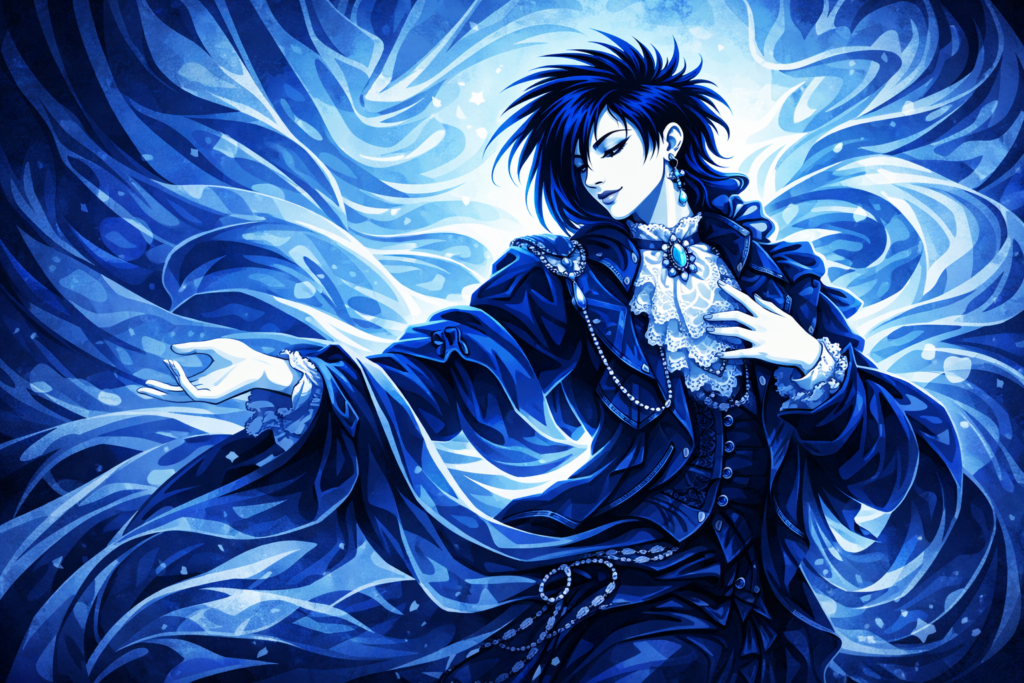
Tanbi Kei focuses on beauty, elegance, and refined drama. Flowing fabrics, lace, corsets, and detailed tailoring are common. The look feels romantic and artistic, almost like a moving painting. Tanbi Kei highlights graceful silhouettes and emotional depth, offering a softer but still powerful expression of visual kei fashion.
Gothic Kote Kei
Gothic Kote Kei represents the heavier and more aggressive side of vkei style. Dark colors dominate, along with leather, spikes, chains, and bold visual kei makeup. This style closely connects to classic Japanese goth fashion and early visual kei band aesthetics. It feels intense, theatrical, and strongly influenced by stage performance.
Raw Nagoya Kei
Nagoya Kei is minimal, serious, and emotionally heavy. It avoids excessive decoration and focuses on dark tones, simple silhouettes, and raw expression. This style reflects music that feels melancholic and restrained. Nagoya Kei proves that visual kei fashion does not need excess to feel powerful—it relies on mood, restraint, and authenticity instead.
Influence of Music on Vkei Fashion
Music is the foundation of vkei fashion. Unlike many fashion movements that begin on the street or runway, visual kei style was born directly on stage. From the very beginning, musicians used clothing, makeup, and hair as tools to express the same emotions found in their songs. Because of this deep connection, vkei fashion continues to evolve alongside music, changing its mood, colors, and details based on sound and feeling rather than seasonal trends.
What Is Vkei?
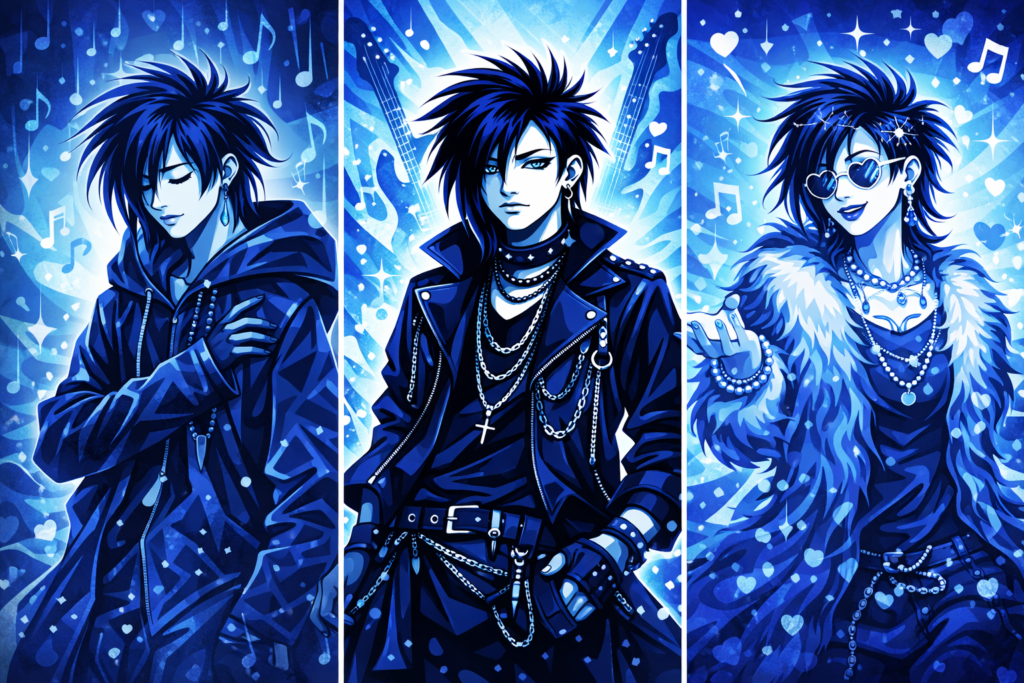
Vkei, short for visual kei, is a Japanese rock movement where visuals are just as important as music. Bands use dramatic outfits, expressive makeup, and bold hairstyles to strengthen their message. This approach turns performances into full visual experiences, making fashion an essential part of the art, not just an accessory.
Roots in Western Music
Western glam rock, punk, and metal heavily influenced early visual kei bands. Artists borrowed ideas like theatrical costumes, leather outfits, and heavy makeup. However, Japanese musicians reshaped these influences by adding storytelling, emotion, and cultural symbolism, creating a unique blend now known as Japanese rock fashion.
Key Bands That Shaped Fashion
Certain bands played a major role in defining visual kei bands fashion. Their stage outfits, album visuals, and music videos inspired fans worldwide. Hairstyles, makeup styles, and clothing choices worn by these musicians often became trends, shaping how visual kei outfits were worn both on stage and in everyday life.
How Music Drives the Style?
Music directly influences vkei style choices. Dark, emotional songs often lead to black outfits, heavy makeup, and sharp silhouettes. Brighter or energetic music inspires colorful looks and playful accessories. In vkei fashion, clothing reflects sound, allowing fans to visually express the music they connect with most.
Fan Impact Today
Fans keep vkei fashion alive and evolving. Through concerts, cosplay, social media, and fan communities, people recreate and adapt visual kei looks in modern ways. This strong fan involvement ensures that vkei fashion remains a living, creative culture rather than a forgotten trend.
Key Elements of a Vkei Outfit
A strong vkei outfit is built piece by piece. Instead of relying on one standout item, visual kei style works best when several elements come together to create mood, balance, and impact. Each part of the outfit plays a role in shaping the overall visual kei look, whether it feels dramatic, elegant, dark, or playful. Understanding these core elements makes it much easier to build visual kei outfits that feel intentional rather than random.
Dark Base Layer
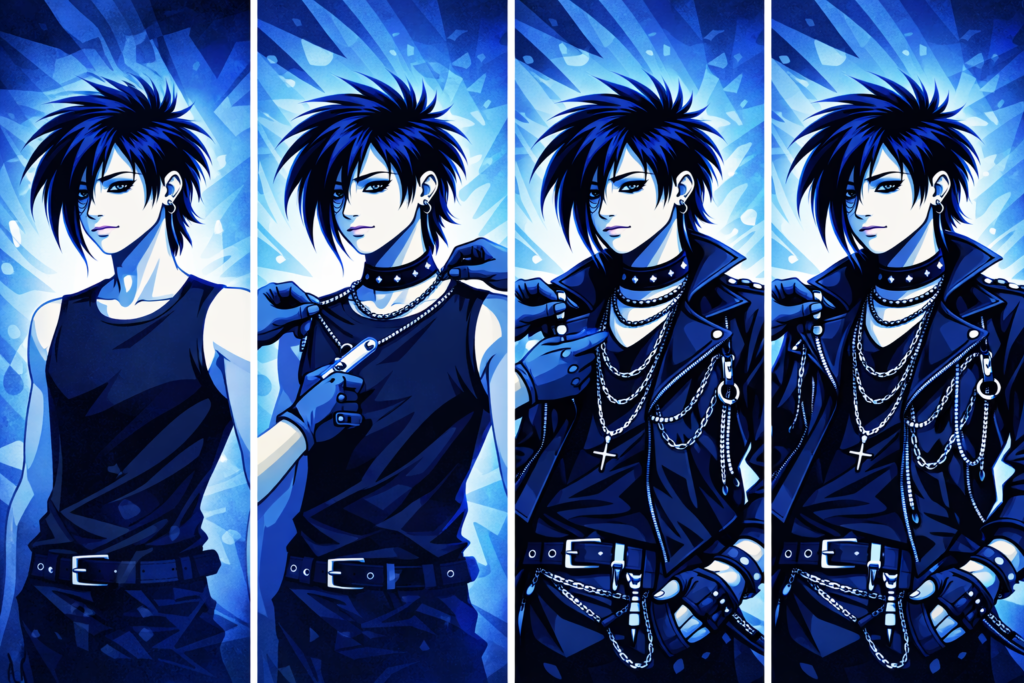
Most vkei outfits start with a dark base layer, usually black. This creates a clean foundation that makes makeup, accessories, and textures stand out. A dark base also helps shape the body visually and keeps the look balanced, especially when makeup and hair are styled to complement your natural face shape, enhancing symmetry and expression.
Bold Patterns
Bold patterns add energy and detail to visual kei clothing. Stripes, leather panels, buckles, lace inserts, and metal accents are common choices. These elements break up solid colors and add contrast, making outfits feel dynamic. Patterns in vkei style are not decorative extras—they help tell a visual story through texture and structure.
Layered Clothing
Layering is one of the most important techniques in vkei fashion. Shirts under vests, coats over jackets, and belts layered on top of fabric add depth. This approach gives outfits a dramatic, almost armor-like feel. Layering also allows flexibility, making it easier to adapt a look for casual wear or stage-inspired outfits.
Heavy Accessories
Accessories are essential in vkei outfits. Chains, rings, chokers, gloves, cuffs, and harness-style belts bring intensity to even simple clothing. These items create movement and sound, adding to the dramatic stage fashion feel. In vkei style, accessories often carry just as much visual weight as clothing itself.
Platform Shoes
Platform shoes complete the visual kei look. Thick-soled boots or heels add height, power, and presence. They help balance layered outfits and heavy accessories while reinforcing the dramatic silhouette. Platform shoes also connect vkei fashion to its rock roots, making the wearer feel grounded, confident, and visually striking.
How Vkei Fashion Has Evolved Over Time?
Vkei fashion has never stayed still. From its early underground beginnings to its current global presence, the style has continuously changed while keeping its emotional core intact. What makes visual kei fashion unique is its ability to adapt without losing identity. Each era added new ideas, materials, and attitudes, shaping the visual kei look into something both nostalgic and modern at the same time.
Early Beginnings
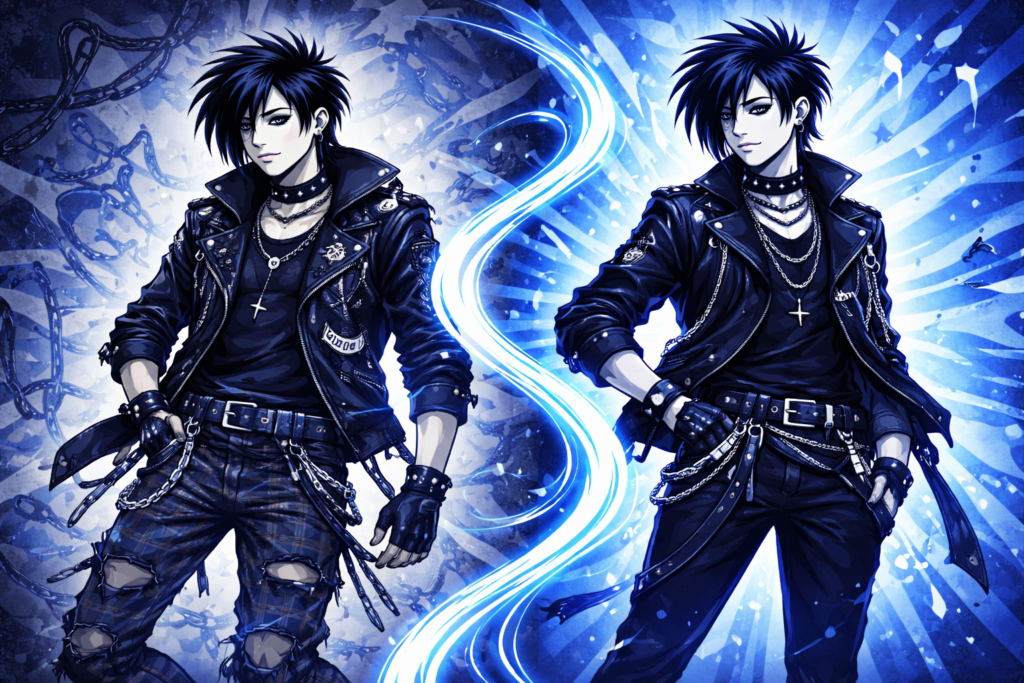
In its earliest phase, vkei fashion was raw and experimental. Musicians focused on standing out visually rather than looking polished. Outfits were often handmade, improvised, or inspired by punk and glam rock. The goal was expression, not perfection, which gave early visual kei style a rebellious and underground feel.
Rise in the 1990s
The 1990s marked a turning point for visual kei fashion. As bands gained mainstream attention, outfits became more detailed and dramatic. High-quality materials, custom designs, and signature looks appeared. This era defined many classic visual kei outfits, setting visual standards that fans still admire and recreate today.
New Styles Emerge
As the movement matured, new vkei styles began to form. Different moods and musical directions led to diverse looks, from colorful and playful to dark and minimal. This period allowed fans more freedom to choose how intensely they wanted to embrace the visual kei aesthetic while still staying connected to the culture.
Global Spread Today
Today, modern visual kei fashion exists far beyond Japan. Social media, concerts, and online communities have helped spread the style worldwide. Many fans now mix visual kei elements with streetwear or everyday clothing, proving that vkei fashion continues to evolve while remaining accessible and creatively relevant.
Why Vkei Fashion Became Popular Worldwide?
Vkei fashion began as a local movement tied closely to Japanese rock music, yet it managed to cross borders and cultures in a way few fashion styles ever do. Its global success did not happen by accident. A mix of strong identity, visual power, and cultural timing helped visual kei fashion travel far beyond Japan and connect with people who had never attended a Japanese rock concert before.
Started in Japan
Vkei fashion started in Japan, where music and visual expression have long been closely linked. Japanese rock bands treated appearance as part of their art, not just performance wear. This mindset allowed visual kei style to grow naturally, supported by dedicated fans who valued creativity, emotion, and individuality in both music and fashion.
Unique Style Draws Eyes
The visual kei look is impossible to ignore. Dramatic makeup, bold hairstyles, and striking outfits instantly stand out in any crowd. Because the style breaks gender rules and fashion norms, it attracts people looking for something different. This strong visual identity helped vkei fashion gain attention quickly, even outside Japan.
Bands Toured World
International tours played a major role in spreading vkei fashion. When Japanese rock bands performed overseas, fans were introduced not only to the music but also to the full visual experience. Concerts became cultural showcases, inspiring audiences to explore Japanese rock fashion, visual kei outfits, and the deeper meaning behind the style.
Anime and Internet Boost
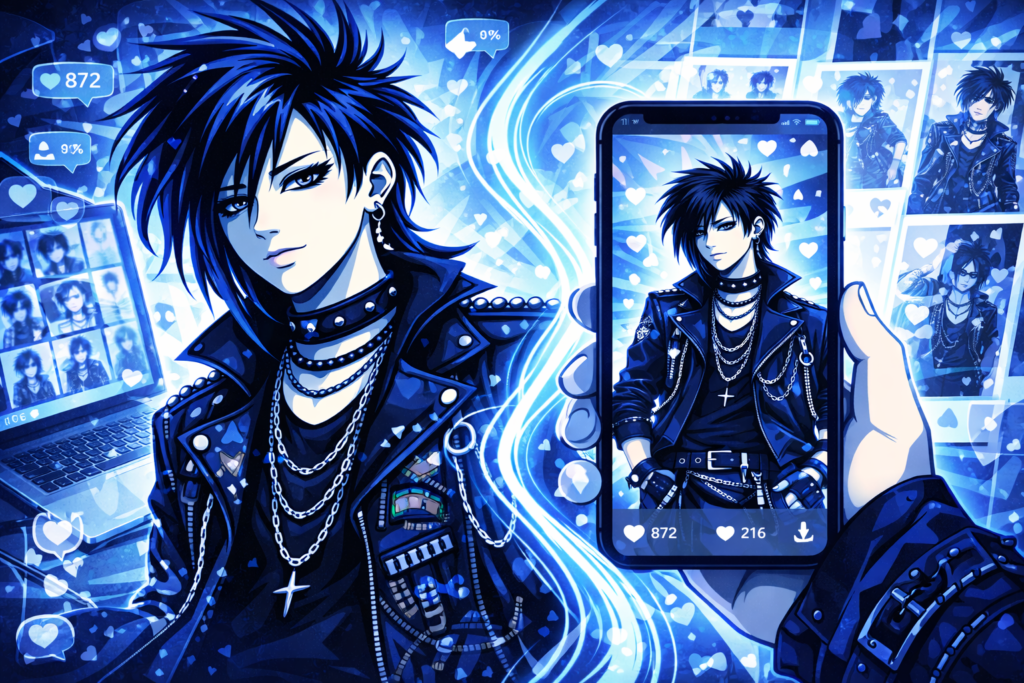
Anime, online platforms, and social media gave vkei fashion a massive boost. Fans shared photos, tutorials, and outfit ideas across borders, turning a niche style into a global movement. These online spaces helped vkei grow alongside wider global trends, similar to how cultural ideas spread and evolve worldwide, as seen in this discussion of global trends shaping modern lifestyles.
Shop Vkei Outfit Here
Shopping for a vkei outfit can feel overwhelming at first, especially because visual kei fashion looks so detailed and dramatic. The good news is that you do not need to buy everything at once. Vkei style is built step by step, mixing statement pieces with simple basics. Whether you shop online, thrift locally, or style what you already own, the key is understanding which elements matter most and how to combine them with confidence.
Hair and Makeup Basics
Hair and makeup are the fastest way to achieve a visual kei look. Start with bold eyeliner, dark eyeshadow, and light contouring to create sharp expressions. For hair, wigs are beginner-friendly and flexible. They allow you to experiment with visual kei hair shapes and colors without permanent changes.
How to Shop or Style It?
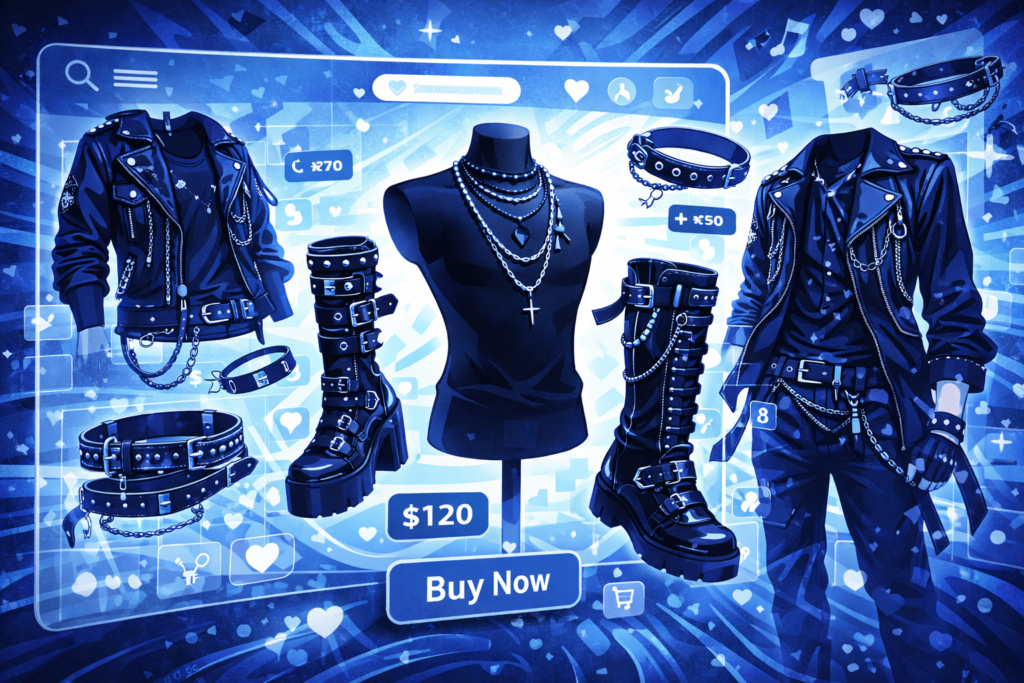
When shopping for vkei outfits, think in layers and textures. Look for black basics first, then add statement pieces slowly. Mixing thrifted clothing with dedicated visual kei items keeps costs down and makes your style feel personal. Styling matters more than price, so focus on balance and mood instead of brand names.
Key Outfit Pieces
Below are essential items that help build strong visual kei outfits. You do not need all of them at once, but these pieces form a solid foundation:
- Black base tops such as fitted shirts, mesh layers, or long-sleeve basics
- Structured jackets or coats with sharp cuts, straps, or metal details
- Layered bottoms like skinny pants, skirts over leggings, or ripped trousers
- Statement belts and harnesses to create shape and depth
- Chains and chokers that add weight and movement to the outfit
- Fingerless gloves or arm warmers for extra texture
- Platform boots or shoes to ground the look and add height
- Small accent accessories such as rings, crosses, or safety pins
By collecting these pieces over time, you can mix and match them to create multiple vkei outfits without constantly buying new clothes.
How to Start Wearing Vkei Fashion?
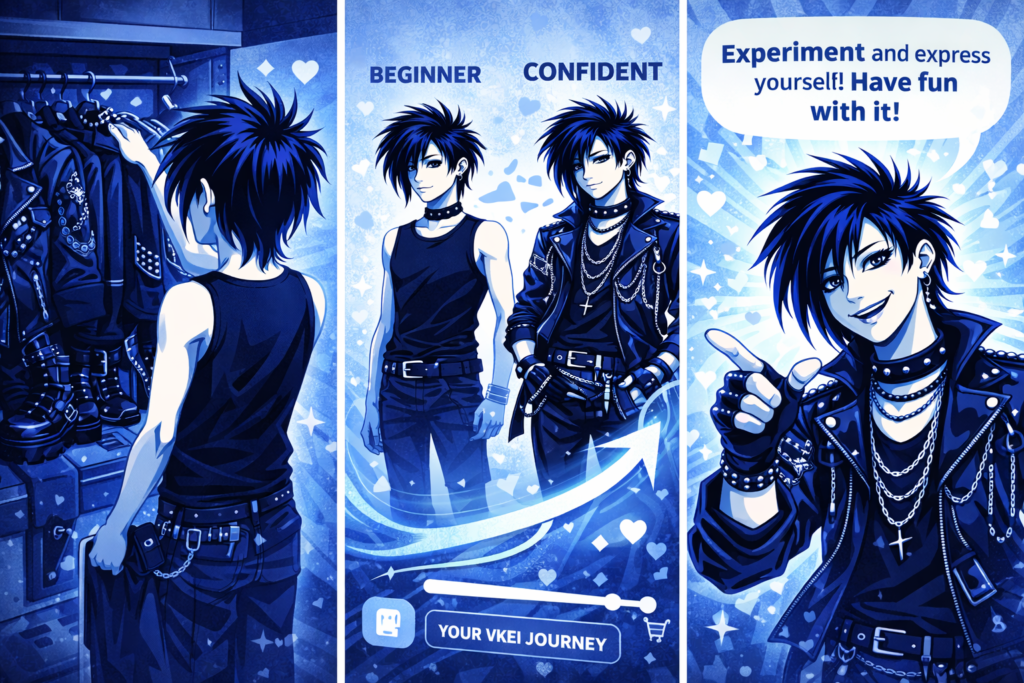
Starting vkei fashion does not require perfection or a full costume on day one. The best way to approach this style is slowly and confidently, building your look over time. Visual kei fashion rewards experimentation, so mistakes are part of the process. Think of it like learning a new language—you begin with simple words before forming full sentences. By focusing on key elements and adding personality step by step, anyone can grow into a vkei style that feels authentic and comfortable.
Pick Basics First
Begin with simple, dark basics. Black tops, fitted pants, or skirts create a strong foundation for visual kei outfits. These pieces act like a blank canvas, making it easier to layer accessories and experiment later. Starting simple helps you understand balance without feeling overwhelmed by too many details at once.
Style Hair Boldly
Hair plays a huge role in the vkei aesthetic. If cutting or dyeing feels intimidating, wigs are a great option. They allow you to try dramatic shapes, layers, and colors safely. Even subtle teasing or styling can change your look, so focus on volume and structure rather than perfection.
Add Makeup Pop
Makeup transforms the face in vkei fashion. Start with eyeliner and eyeshadow to add intensity around the eyes. You do not need heavy makeup at first—small changes can create a big impact. As you gain confidence, experiment with contouring and bolder color contrasts to express emotion.
Choose Fun Accessories
Accessories are where vkei style really comes alive. Chains, chokers, rings, gloves, and belts instantly elevate basic outfits. Start with one or two statement pieces instead of wearing everything at once. Accessories help tell your visual story while keeping your outfit flexible and personal.
Shop Smart as Beginner
Shopping smart makes vkei fashion accessible. Thrift stores, online marketplaces, and DIY projects are excellent resources. Avoid buying full outfits immediately. Instead, collect pieces slowly and learn how to mix them. This approach saves money and helps you discover your unique visual kei style naturally.
Vkei Fashion vs Other Japanese Fashion Styles
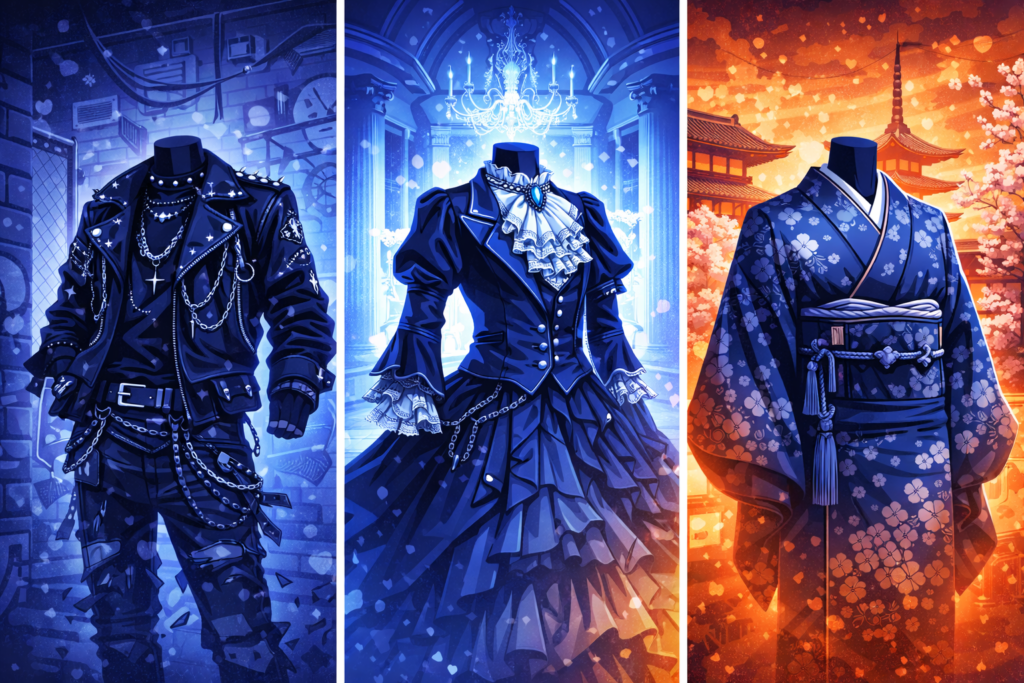
Japanese fashion is incredibly diverse, with many styles growing from different subcultures, cities, and creative movements. While vkei fashion often gets grouped together with other Japanese alternative looks, it stands apart in important ways. Understanding how visual kei compares to other popular styles helps clarify what makes it unique and why it continues to attract fans worldwide. Below is a clear breakdown of how vkei fashion differs from other well-known Japanese fashion movements.
Vkei vs Harajuku
Harajuku fashion is rooted in street culture and personal creativity. It focuses on bright colors, playful layering, and mixing unrelated styles. In contrast, vkei fashion is deeply tied to music and emotion. While Harajuku celebrates chaos and fun, vkei style aims for drama, storytelling, and a strong connection to Japanese rock fashion.
Vkei vs Lolita
Lolita fashion centers on elegance, structure, and vintage inspiration, often drawing from Victorian and Rococo aesthetics. Outfits follow strict rules and silhouettes. Vkei fashion, on the other hand, is flexible and expressive. It breaks rules instead of following them, allowing darker themes, gender fluidity, and stronger emotional intensity in both clothing and makeup.
Key Vkei Traits
Below are the core traits that clearly separate vkei fashion from other Japanese styles:
- Music-driven identity – Visual kei style is closely linked to Japanese rock bands and live performances.
- Emotional expression – Outfits reflect mood, lyrics, and personal feelings rather than trends.
- Androgynous freedom – Gender boundaries are blurred, supporting open self-expression.
- Dramatic visuals – Heavy makeup, bold hair, and layered outfits create a strong stage presence.
- Dark and theatrical themes – Many vkei outfits align with darker moods and aesthetics, sometimes overlapping with broader dark fashion movements, though vkei remains distinct in its musical roots and symbolism.
- Constant evolution – Vkei fashion adapts over time while maintaining its emotional core.
These traits explain why vkei style feels more like a living art form than a traditional fashion trend.
Quick Comparison Table
The table below offers a clear side-by-side overview of vkei fashion compared to other Japanese fashion styles:
| Style | Main Focus | Colors & Vibe | Origin Tie |
| Vkei Fashion | Music, emotion, visual impact | Dark tones, dramatic, theatrical | Japanese rock bands and live performance culture |
| Harajuku | Street creativity and individuality | Bright, mixed, playful, chaotic | Youth street fashion in Tokyo |
| Lolita | Elegance and structured beauty | Pastels, lace, soft and refined | Victorian and European-inspired aesthetics |
| Gothic Japanese Fashion | Dark elegance and mood | Black, deep reds, mysterious | Gothic subculture and literature |
| Punk Japanese Fashion | Rebellion and anti-fashion | Black, red, distressed textures | Punk music and counterculture |
| Streetwear Japan | Comfort and trend influence | Neutral or bold, casual | Urban youth culture and global trends |
This comparison shows that while vkei fashion shares elements with other Japanese styles, its deep connection to music, emotion, and dramatic self-expression sets it apart as a unique and enduring cultural movement.
Modern Vkei Fashion in Today’s Pop Culture
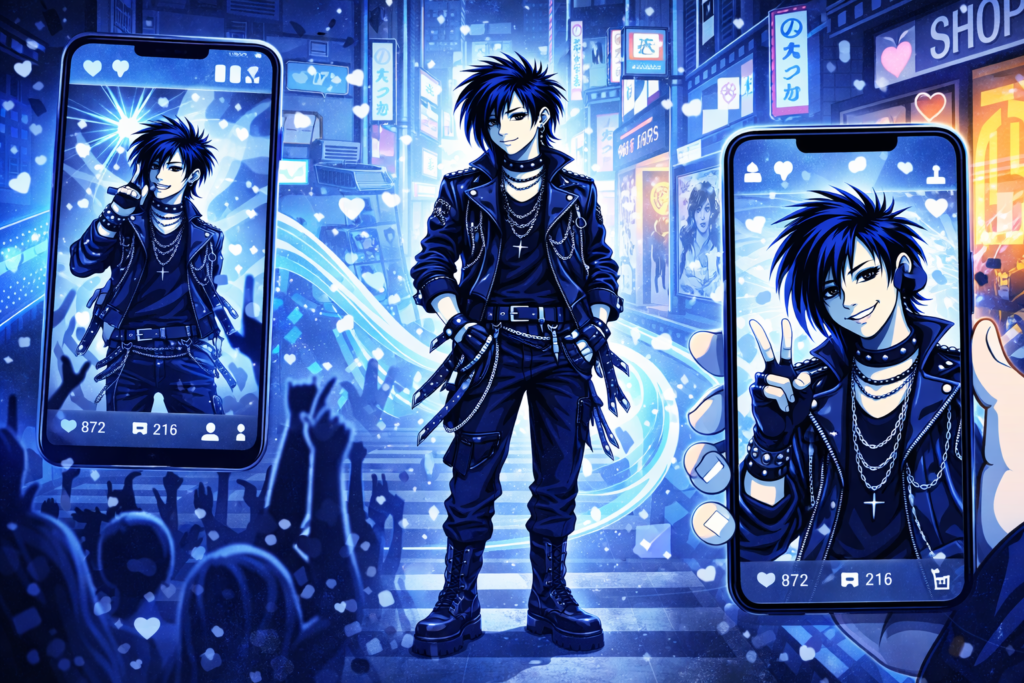
Modern vkei fashion has moved beyond concert halls and underground scenes into everyday pop culture. While the roots remain deeply connected to Japanese rock music, today’s visual kei style is more flexible and wearable than ever. Social media, fashion influencers, and global pop trends have softened some of the extreme elements while keeping the emotional and artistic core intact. This evolution allows visual kei fashion to exist both as a bold statement and a subtle influence in modern wardrobes.
Core Style Basics
At its core, modern vkei fashion still focuses on contrast, emotion, and individuality. Black remains the main color, but it is often paired with cleaner silhouettes and simpler layers. Instead of full stage outfits, many people now wear toned-down vkei elements that fit easily into daily life while keeping the dramatic edge.
Makeup and Hair
Modern visual kei makeup and hair are more refined but still expressive. Heavy eyeliner and sharp contours remain popular, yet they are often blended more softly. Hairstyles may be less extreme, using texture and volume instead of dramatic spikes. This balance makes the visual kei look easier to wear outside concerts and photoshoots.
Role in Pop Culture
Vkei fashion continues to influence anime, cosplay, music videos, and digital art. Many modern artists and creators borrow visual kei aesthetics to express emotion and mystery. Online platforms have helped this style reach new audiences, turning it into a recognizable symbol of alternative Japanese style in global pop culture.
Key Outfit Ideas
Below are popular ways people style modern vkei fashion today, blending classic elements with everyday wear:
- Minimal vkei streetwear with black layers, fitted pants, and subtle accessories.
- Music-inspired looks using band tees paired with tailored jackets and boots.
- Soft gothic outfits that mix lace, mesh, and clean silhouettes.
- Casual vkei outfits with statement belts or chains added to simple clothing.
- Gender-neutral styling that highlights androgynous shapes and fluid layering.
- Accessory-focused looks where makeup, chokers, or boots become the main statement.
These outfit ideas show how modern vkei fashion adapts to current lifestyles while staying true to its expressive and emotional roots.
Where to Buy Vkei Fashion Clothing and Accessories?
Finding visual kei fashion pieces can feel tricky at first, especially since many authentic looks originated in Japan. However, there are now plenty of places — both global and niche — where you can shop for visual kei outfits, accessories, boots, and more online. Whether you want bold statement pieces or subtle items to build your style, the options below make it easier to collect everything you need.

Top Online Stores
There are several online stores and marketplaces where you’ll find visual kei clothing and accessories. Shops like Madame Chocolat offer punk and vkei-inspired fashion that includes jackets, tops, and skirts suited for bold looks. Etsy also has a wide range of handmade and alternative pieces that fit the visual kei aesthetic, from band tees to gothic layers. Japanese brands like SEX POT ReVeNGe, h.Naoto, and Algonquins are also popular for authentic vkei–leaning clothing, though international shipping might vary.
Budget Options
If you’re shopping on a budget, marketplaces like Etsy and eBay often list affordable visual kei outfits and accessories, including pants, tops, and chokers that match the vkei aesthetic. Thrift stores and local vintage shops can also surprise you with layered pieces that fit the style. Many fans mix these finds with DIY tweaks to bring the look together without spending much.
Shopping Tips
When buying vkei pieces online, focus on versatility. Start with items that can mix with basics — black tops, belts, chains — and add dramatic pieces over time. Pay attention to sizing, especially with Japanese brands, and read reviews or check return policies. If direct international shipping isn’t available, proxy services like ZenMarket can help you order items from Japanese shops.
Common Mistakes Beginners Should Avoid
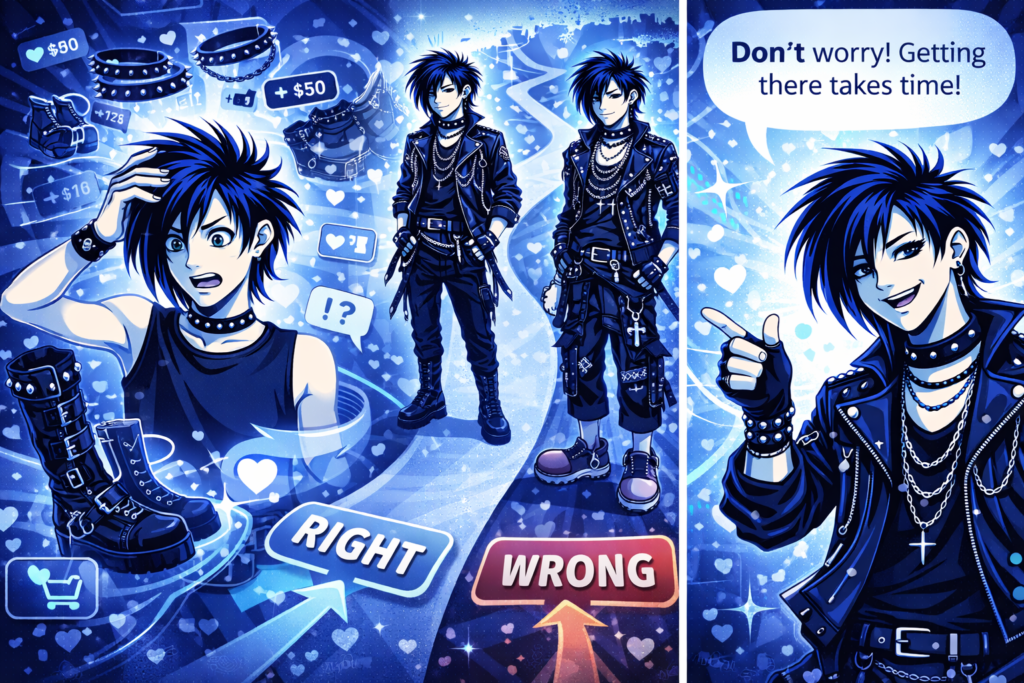
Starting vkei fashion is exciting, but it’s easy to feel overwhelmed at the beginning. Many newcomers make the same small mistakes—not because they lack creativity, but because they try to rush the process or copy everything at once. Vkei style is learned through experimentation, patience, and self-discovery. Avoiding these common pitfalls will help you build confidence faster and enjoy the journey instead of stressing over perfection.
Expect Too Much Early
One of the biggest mistakes is expecting instant results. Vkei fashion takes time to understand and develop. Your first outfits may feel incomplete or awkward, and that’s normal. Instead of aiming for perfection right away, focus on learning what feels comfortable and expressive. Growth happens gradually, not overnight.
Skip the Basics
Some beginners jump straight to extreme pieces and forget the basics. Without simple black layers, fitted tops, or neutral bottoms, even the best accessories can feel unbalanced. Basics act like a strong foundation. Skipping them often leads to outfits that feel messy instead of intentional within the vkei aesthetic.
Plan Too Much, Do Too Little
Overplanning can slow progress. Watching tutorials and saving inspiration is helpful, but only to a point. If you spend all your time planning and none experimenting, your style won’t grow. Try things on, mix pieces, and learn by doing. Vkei fashion rewards action more than perfect preparation.
Practice Inconsistently
Trying vkei fashion once and then stopping for months makes it harder to improve. Consistency builds confidence and skill. You don’t need to dress fully vkei every day, but regular practice—styling hair, experimenting with makeup, or refining outfits—helps the style feel more natural over time.
Ignore Feedback
Ignoring feedback can limit growth. Online communities, friends, or fellow fans often offer helpful advice. Not all feedback needs to be followed, but listening helps you see your style from new angles. Vkei fashion thrives on shared creativity, and constructive input can sharpen your personal expression.
By avoiding these common mistakes, beginners can enjoy vkei fashion as a creative journey rather than a stressful challenge.
The Future of Vkei Fashion
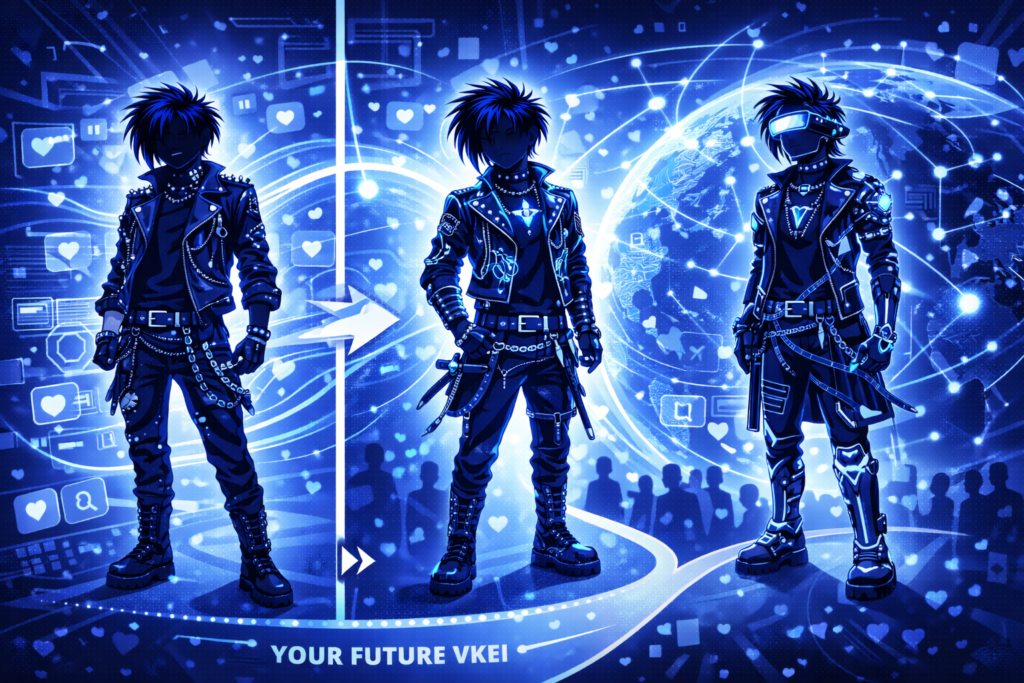
Vkei fashion has already proven that it can survive changing trends, shifting music scenes, and cultural boundaries. Instead of fading away, it continues to reshape itself while staying true to its emotional and artistic roots. Looking ahead, the future of visual kei fashion appears flexible, global, and increasingly personal. Rather than moving in one fixed direction, vkei style is branching out into many forms, allowing more people to connect with it in their own way.
Growing Popularity
Interest in vkei fashion continues to grow, especially online. Social media platforms, short-form videos, and global fan communities make it easier than ever to discover and share visual kei inspiration. Younger audiences are finding the style through music clips, anime aesthetics, and alternative fashion content, keeping the movement alive and relevant.
Key Style Evolutions
Future vkei fashion is becoming more wearable and adaptable. While dramatic looks remain important, many fans now blend vkei elements with streetwear, minimalist fashion, or casual outfits. This evolution makes the style easier to wear daily while preserving signature features like bold makeup, layered clothing, and expressive silhouettes.
Global Spread
Vkei fashion is no longer limited to Japan. Fans across Europe, the Americas, and other regions continue to reinterpret the style through their own cultural lens. This global spread encourages creativity and diversity, ensuring that visual kei fashion evolves as a shared international movement rather than a closed subculture.
As long as people seek emotional expression through fashion, vkei style will continue to adapt, inspire, and thrive.
Frequently Asked Questions
If you’re new to vkei fashion, it’s normal to have questions. The style looks bold and complex at first glance, but once you understand its meaning and flexibility, it becomes much more approachable. Below are clear, simple answers to the most common questions people ask when discovering visual kei fashion for the first time.
Vkei fashion, short for visual kei fashion, means expressing emotion and identity through bold visual style inspired by Japanese rock music. It focuses on dramatic clothing, expressive makeup, and unique hair rather than following mainstream fashion rules. The goal is self-expression, not fitting into trends.
No, vkei fashion is not limited to Japanese music fans. While the style comes from Japanese rock culture, many people enjoy it purely for its visual creativity. You don’t need to listen to vkei bands to wear the fashion. Appreciation for art, emotion, and alternative style is enough.
Yes, absolutely. Vkei fashion is known for its androgynous approach. It intentionally blurs gender boundaries, allowing anyone to wear makeup, skirts, suits, lace, or heavy boots. Gender expression is fluid in vkei style, making it one of the most inclusive fashion movements.
Vkei fashion does not have to be expensive. Beginners can start with basic black clothing, simple accessories, and minimal makeup. Thrift stores, DIY projects, and gradual shopping help keep costs low. You can build strong vkei outfits over time without buying full costumes or high-end pieces.
While both styles use dark colors and dramatic elements, vkei fashion is music-driven. Goth fashion often focuses on mood, literature, or subculture themes, while vkei style reflects specific musical emotion and performance. Vkei also tends to be more theatrical and flexible than traditional goth fashion.
Yes, vkei fashion is still popular, especially online. Social media, cosplay communities, and global fan groups keep the style active. While it may not be mainstream, modern visual kei fashion continues to evolve and attract new audiences around the world.
Yes, vkei fashion can be worn casually. Many people mix vkei elements—such as accessories, makeup, or boots—with everyday outfits. You don’t need full stage looks daily. Casual vkei styling is common and makes the fashion more wearable in daily life.
Vkei is partly inspired by goth, especially in darker styles like Kote Kei. However, it also draws from glam rock, punk, and Japanese theater. Goth is just one influence among many. Vkei fashion blends these inspirations into something visually and culturally unique.
Vkei is both a music movement and a fashion style. It began in Japanese rock music, where bands emphasized visuals alongside sound. Over time, the fashion grew into its own culture. Today, vkei exists as a creative space where music and visual expression are deeply connected.